Orientation: Scope, Ethics, and the Nature of Kami-Guided Authority
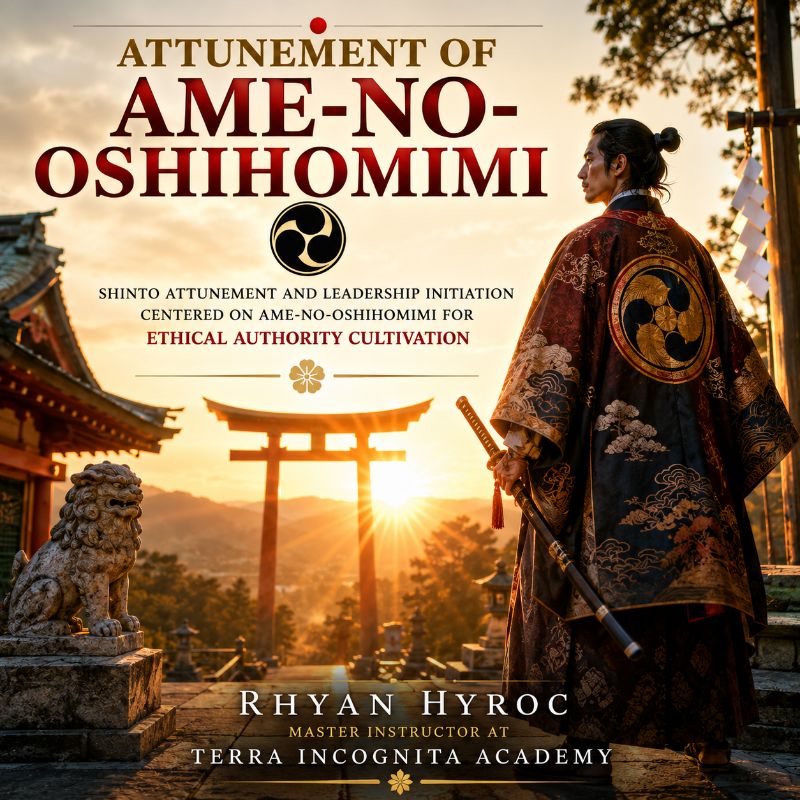
Course: Attunement of Ame-no-Oshihomimi
Module: Foundations of Ame-no-Oshihomimi Attunement and Authority Ethics
Instructor: T.I. Team
🔓 Free Preview Lesson
Learning Intent
By the end of this lesson, you will establish the ethical frame, scope, and relational etiquette for Ame-no-Oshihomimi attunement. You will define authority as accountable stewardship exercised in partnership with benevolent spiritual allies, and you will articulate your personal rules for consent-based collaboration with kami and ancestral presences.
You will construct a disciplined practice container: clear boundaries for time, space, offerings, documentation, and consent checks. You will draft an integrity oath, an accountability protocol, and a risk-mitigation plan that honors the kami’s cooperative nature and your responsibility to community, tradition, and self.
Tradition Grounding
This course is Shinto-informed and centers on Ame-no-Oshihomimi; it does not adopt non-Japanese ritual systems. However, competent practitioners benefit from understanding how historical sources treat authority, integrity, and disciplined relationship with spirits. Two comparative reference points are instructive for ethics and structure:
- Heptameron & Arbatel (Arbatel of Magic): The Arbatel frames spirits as wise friends to be approached with virtue, temperance, and gratitude. It emphasizes piety, ethical intention, and reciprocity—principles congruent with Shinto etiquette and kami-relational practice, even though ritual forms differ.
- Picatrix (Ghayat al-Hakim) and Ars Notoria: Both emphasize time-discipline, purity, vocalized prayer/tonal formulae, and meticulous record-keeping. While their cosmologies are distinct, their insistence on preparation, ethical aim, and structured recitation parallels Shinto’s use of norito and attention to purity states.
We reference these sources for ethical scaffolding only—virtue, consent, preparation, and documentation—not for ritual borrowing. Your practice will remain firmly aligned with kami-centered etiquette.