Ame-no-Wakahiko in the Kojiki and Nihon Shoki: Text, Function, and Theme
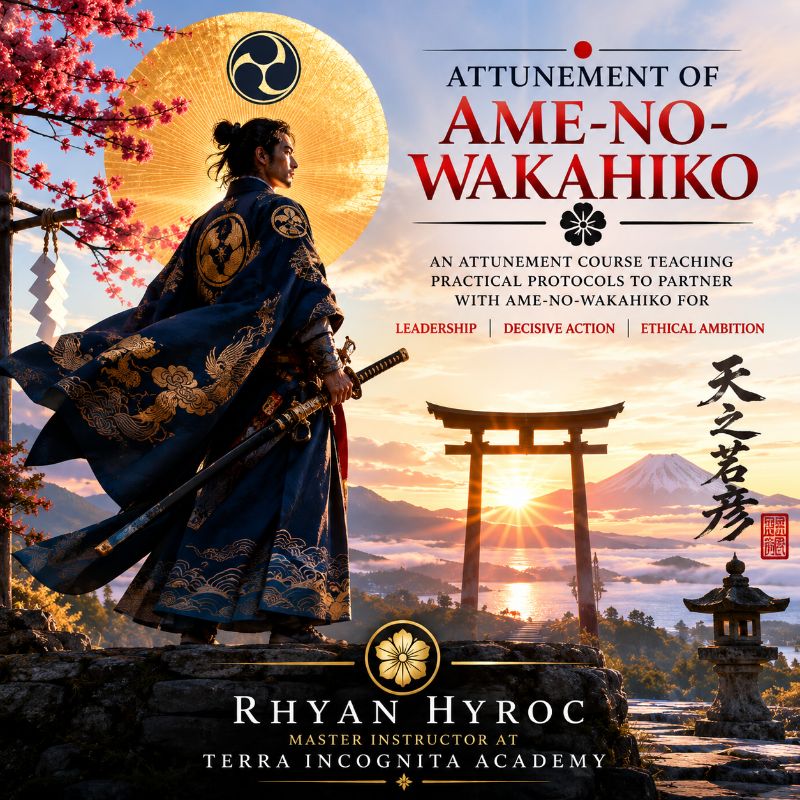
Course: Attunement of Ame-no-Wakahiko
Module: Foundations of Ame-no-Wakahiko Attunement
Instructor: T.I. Team
🔓 Free Preview Lesson
Learning Intent
You will establish a precise textual foundation for ame-no-wakahiko attunement by reading the core narratives of Ame-no-Wakahiko in the Kojiki and the Nihon Shoki as functional instruction, not folklore. The focus is threefold: mandate (receiving a charge aligned with destiny), trial (the testing of intention and conduct under power), and return (feedback and consequence that restore alignment). These themes are the structural pillars for cultivating courage, ambition, and a mature relationship with destiny.
By the end of this lesson, you will be able to identify the key passages, extract actionable motifs, and translate them into attunement aims without importing foreign ceremonial frames. You will also define boundaries that protect the integrity of Japanese kami practice while enabling technically exacting energy work. This is the base upon which all subsequent practical protocols will stand.
Tradition Grounding
We anchor our work in the Kojiki (712 CE) and the Nihon Shoki (720 CE), the earliest compilations of Japan’s mytho-historical record. They are our primary references for Ame-no-Wakahiko’s story. As intermediate practitioners, you already understand that textual grounding prevents projection. Here, the texts will function as the ethical and operational template for engaging a benevolent teacher-kami.
To clarify scope, we explicitly demarcate our method from Western grimoire systems, even as we recognize historical currents of ritual technology. For boundary-setting only: Picatrix (Ghayat al-Hakim) and the Heptameron & Arbatel demonstrate how cultures codify celestial mandate, timing, and spirit-relationship into operative form. We do not borrow their procedures; we affirm that Japanese sources supply their own complete sensibility—purification (misogi), sincerity, reciprocity, and the living presence of kami in land and lineage. Our practice remains wholly situat