Purity, Renewal, and Hayaakitsuhime: Scope, Language, and Safety
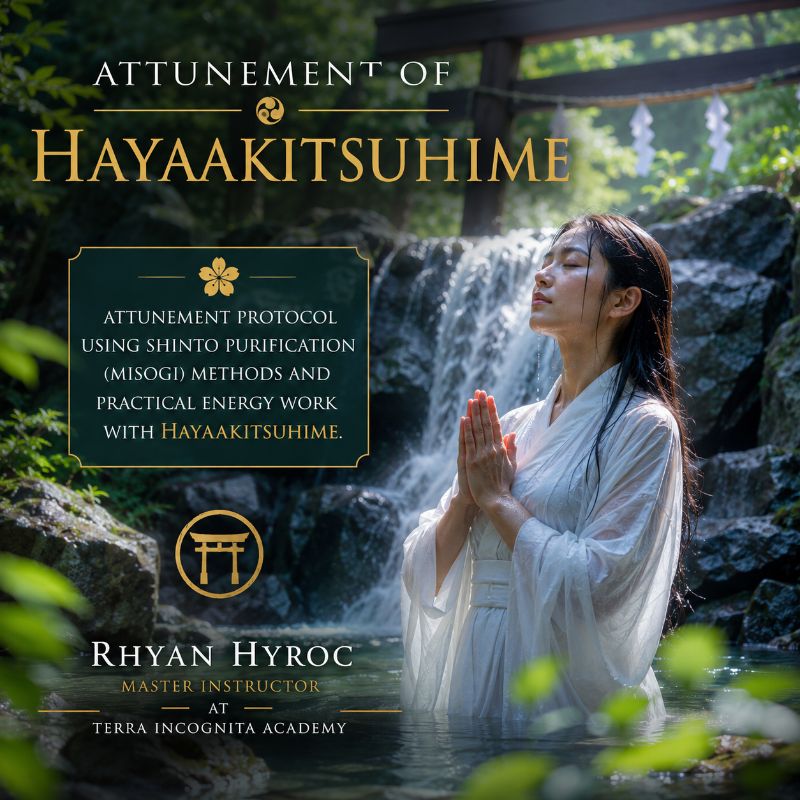
Course: Attunement of Hayaakitsuhime
Module: Foundations of Shinto-Informed Purification and the Attunement of Hayaakitsuhime
Instructor: T.I. Team
🔓 Free Preview Lesson
Learning Intent
This lesson establishes the operative definitions and ethical scaffolding for attuning to Hayaakitsuhime, the “Swift-Clearing Princess,” as a restorative guide within a Shinto-informed purification lineage. You will learn what purity and renewal mean in practical terms, how they function as energetic hygiene, and what standards of conduct sustain a reliable relationship with a benevolent spirit teacher.
By the end of this session, you will (1) define purity, renewal, and attunement as precise working terms; (2) establish personal baselines for energy, attention, and recovery; and (3) implement consent-based protocols for spirit partnership. This anchors a disciplined tone for the course and ensures that subsequent techniques—breath, misogi, norito, and talismanic maintenance—rest on clarity and safety.
Tradition Grounding
Our foundation is historical and practical:
- Kojiki (712 CE): records Izanagi’s purification after returning from Yomi. His act of washing produces deities associated with cleansing and renewal. This demonstrates misogi as an ontological reset—purity generates order and vitality.
- Nihon Shoki (720 CE): provides variant accounts of creation and purification, emphasizing purification as a state-restoring rite rather than moral punishment. The texts show that pollution (kegare) is a condition that can be transformed through correct action.
- Engishiki, Norito (10th century): especially the Great Purification (harae) prayers, articulate procedures and language for removing impurities and restoring communal and personal balance. They encode the etiquette, offerings, and address to purifying deities that inform our approach to Hayaakitsuhime.
This course adopts these sources as methodological anchors: purific