Orientation: Scope, Contract, and Attunement Goals
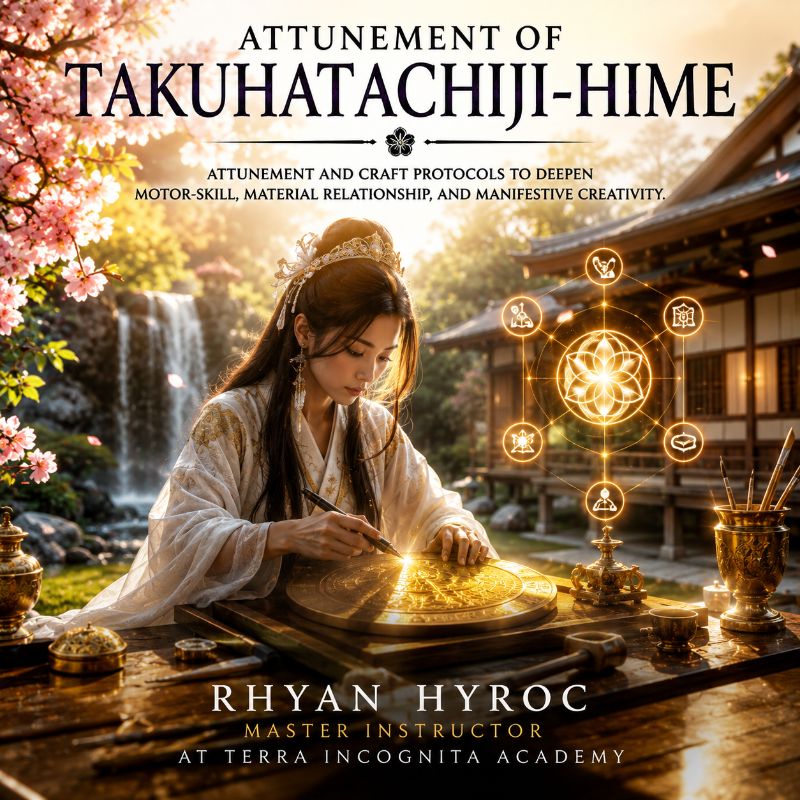
Course: Attunement of Takuhatachiji-hime
Module: Foundations of Takuhatachiji-hime Attunement: Context, Lineage, and Scope
Instructor: T.I. Team
🔓 Free Preview Lesson
Learning Intent
This lesson orients your practice to the precise scope and ethics of takuhatachiji-hime attunement. You will establish a working contract for study, set your schedule, and understand how relationship-driven alignment with a benevolent craft intelligence refines both perception and execution in making. The objective is not worship, abstraction, or passive devotion; it is disciplined partnership that upgrades attention, hand-skill, and workflow while preserving your agency, judgment, and aesthetic voice.
By the end of this lesson you will be clear on what is included and excluded in this lineage; how we integrate animic craft protocols with grimoire-informed consecratory methods without adopting unrelated liturgical frameworks; and how to measure outcomes. You will set a cadence of daily micro-practice and weekly assessment to ensure that your ritual and studio work feed each other in a single, coherent trajectory toward mastery.
Tradition Grounding
Our orientation is Shinto-adjacent and craft-based: we approach Takuhatachiji-hime as a cooperative kami-level intelligence of weaving, ordering, and skillful manifestation. We use two grimoire-informed anchors:
- Picatrix (Ghayat al-Hakim): for its methodical treatment of material consecration, timing, and imaginal impressing of intention into matter. We adopt its precision in aligning operation, materia, and operator state—while translating that precision into animic etiquette and offerings appropriate to craft lineages.
- Heptameron & Arbatel: the Arbatel’s emphasis on friendly, ethical relations with spirits, clarity of purpose, and modest, clean rites supports our stance that guiding intelligences are benevolent collaborators. We adapt its virtues—sobriety, gratitude, and concise orations—into our attunement liturgy.
As comparative context (not as primary frameworks), the Ars Notoria’s project