Tama and Tama-no-Oya: Definitions, Lineage, and Scope
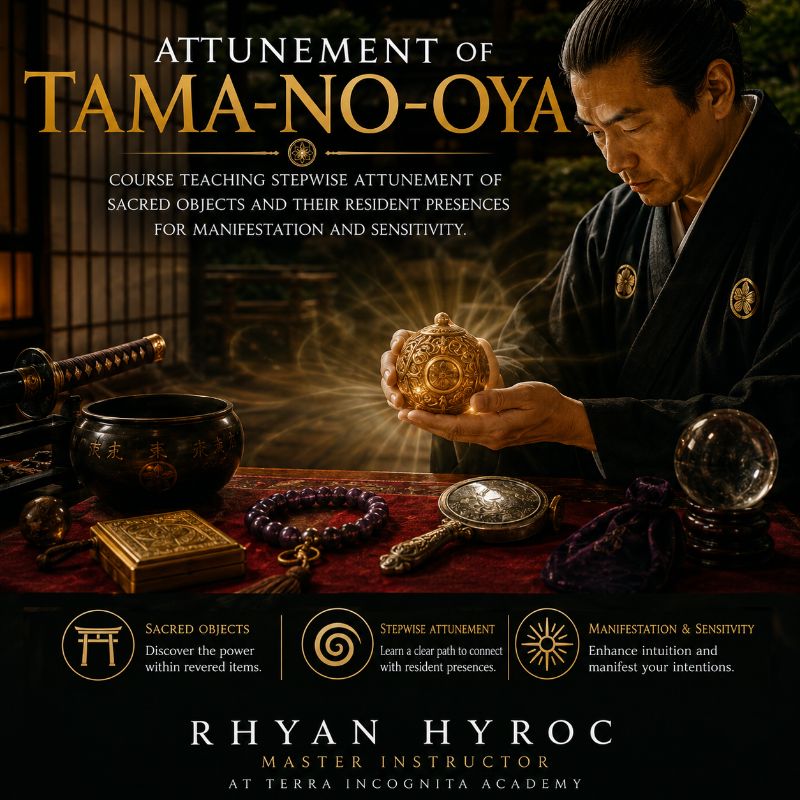
Course: Attunement of Tama-no-Oya
Module: Foundations of Tama-no-Oya Attunement
Instructor: T.I. Team
🔓 Free Preview Lesson
Learning Intent
This lesson gives you precise operational definitions of tama (spiritual essence) and tama-no-oya (generative source of essences) and anchors them in historical usage. You will understand why, in object-focused practice, presence is embodied rather than symbolic, and how this stance reorganizes your method and results. The emphasis is relationship: practitioner, sacred object, and resident presence working as collaborators toward measurable outcomes.
By the end, you will be able to identify an object’s role as a seat of presence, distinguish representation from embodiment, and articulate the exact responsibilities of each participant in tama-no-oya attunement. This creates the foundation for the cleansing, consecration, and progressive attunement protocols that follow in the course.
Tradition Grounding
Japanese practice preserves an object-centered theology of presence in which yorishiro and shintai act as vessels for residing essences. Early chronicles and shrine records describe tama as a living, responsive potency familiar to ritualists, farmers, and court specialists alike. While our path is Japanese-inspired and object-focused, it is instructive to note points of structural consonance with other historical currents concerned with ensouled objects:
- Picatrix (Ghayat al-Hakim): Treats talismanic substances and elected times as vehicles that invite and sustain presence. The method—object specificity, timing, and ethical orientation—parallels disciplined stewardship of a vessel for tama, though our cosmology and ritual grammar remain distinct.
- Heptameron & Arbatel: Emphasize respectful address, clear petitions, and reciprocal offering