Tamayori-hime in Canon: Kojiki and Nihon Shoki Anchors
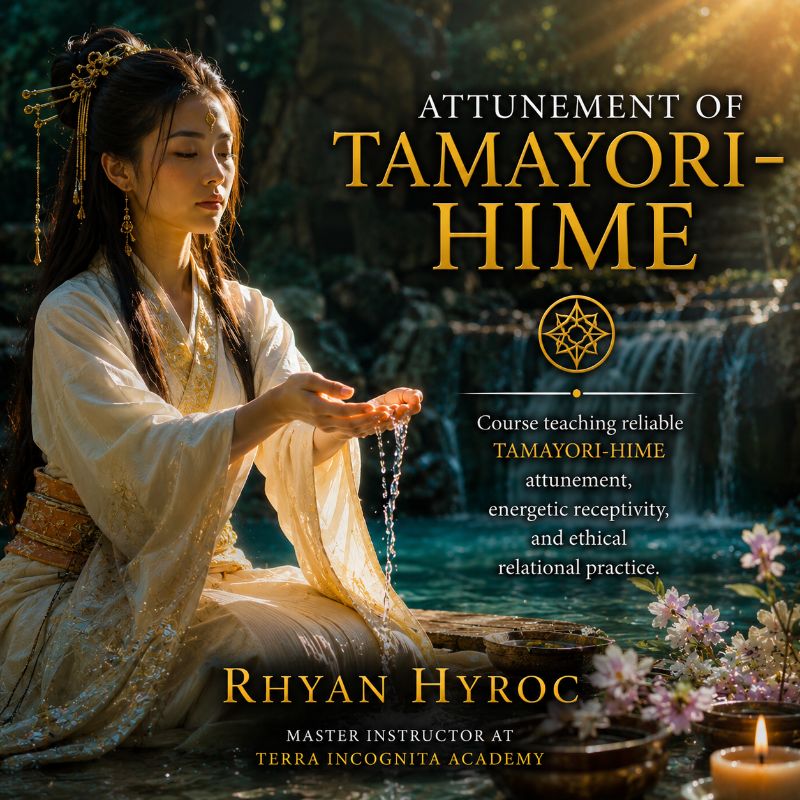
Course: Attunement of Tamayori-hime
Module: Foundations of Tamayori-hime Attunement: Context, Language, and Orientation
Instructor: T.I. Team
🔓 Free Preview Lesson
Learning Intent
You will establish a historically anchored understanding of Tamayori-hime as she appears in the Kojiki and Nihon Shoki, and define how her narrative role and qualities translate into rigorous parameters for tamayori-hime attunement. By the end of this lesson, you will be able to point to concrete passages, extract practice-relevant attributes, and articulate a precise profile of the guiding presence you are training to receive.
This clarity prevents projection and protects the integrity of your work. Rather than chasing vague impressions, you will align your receptivity with verifiable sources, ethical norms, and a repeatable method. This lesson initiates the course standard: historical texts guide form, and disciplined practice reveals function.
Tradition Grounding
Our anchors are the Kojiki (712 CE) and the Nihon Shoki (720 CE). These chronicles record Tamayori-hime as sister to Toyotama-hime, nurse and later consort of Ugayafukiaezu no Mikoto, and mother of four sons including Kamuyamato Iwarebiko (Emperor Jimmu). Her name signals “she who invites/entices the spirit” (tama-yoru). This pairing of lineage transmission and spirit-inviting function is central to how we configure receptivity practice.
Supplementary context appears in later court and ritual materials such as the Engishiki (10th century) with its corpus of norito and purification rites, and in mytho-linguistic scholarship on tama-related rites (tama-furi, tama-shizume). While the Kojiki and Nihon Shoki provide the narrative core, the ritual logic of inviting, stabilizing, and transmitting spirit is illuminated by these liturgical traditions and by the praxis of shrine culture across regions.
Core Teaching
Textual Attestations: What the Chronicles Actually Say
In the Kojiki’s narra