Mizuhanome in Context: Attributes from Classical Sources
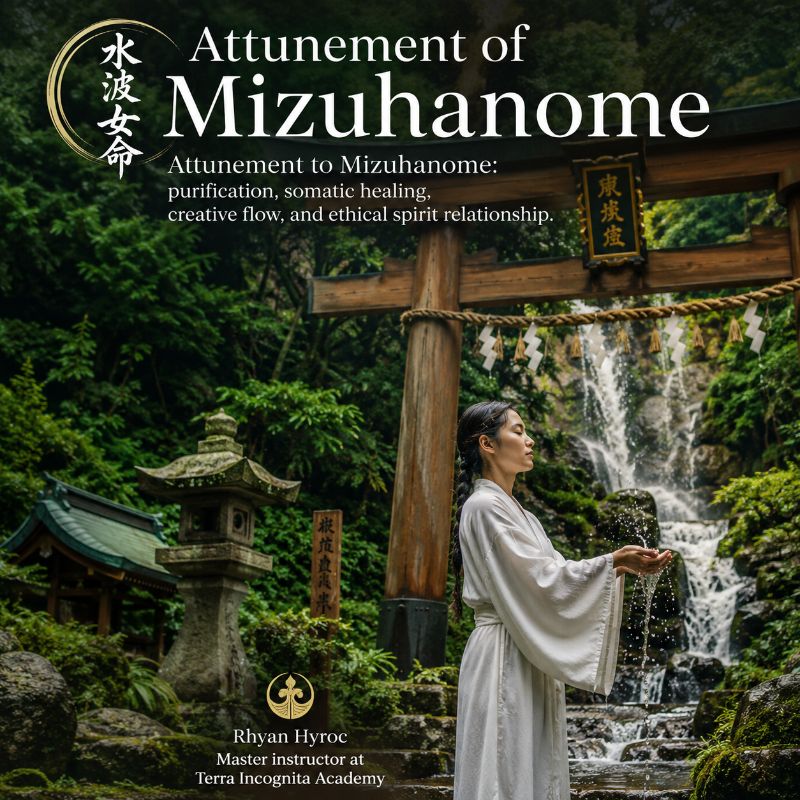
Course: Attunement of Mizuhanome
Module: Foundations of Mizuhanome Attunement: Sources, Attributes, and Proper Approach
Instructor: T.I. Team
🔓 Free Preview Lesson
Learning Intent
This lesson establishes a precise understanding of Mizuhanome-no-kami as purifier and generatrix within the Japanese record, positioning your mizuhanome attunement on disciplined historical ground. You will learn how classical sources define her domain—fresh water, purification, fertility, adaptability—and how these attributes guide concrete aims: emotional regulation, creative renewal, and inner quiet through relationship with moving water.
By the end of this lesson you will be able to: cite the principal references for Mizuhanome, name accurate epithets, and distinguish her purificatory action from generalized “water symbolism.” You will know how to speak to her with clarity, why springs, wells, and flowing streams are privileged loci of approach, and how to orient your practice so it is respectful, exact, and effective.
Tradition Grounding
The primary foundations for understanding Mizuhanome-no-kami are Japanese. The Kojiki (Record of Ancient Matters, 712 CE) and the Nihon Shoki (Chronicles of Japan, 720 CE) provide the earliest attestations of water deities and the cosmological function of purification following disorder. The Engishiki (10th century) preserves norito (ritual prayers) and protocols for harae (purificatory rites) that inform how to address water kami properly. Within these texts, water is not a backdrop or symbol; it is a living current of order, restoration, and generative power.
For comparative awareness only—without making them primary to this practice—consider that the Picatrix (Ghayat al-Hakim) and the Arbatel of Magic, in their respective traditions, also treat water as a medium of purification and adaptability. This resonance underscores a cross-cultural recognition of water’s regulating function, yet our operative grammar here remains squarely Shinto-inspired: address the kami as honored teachers, build reciproc