Tenjin as Patron of Scholarship: Michizane’s Historical Arc
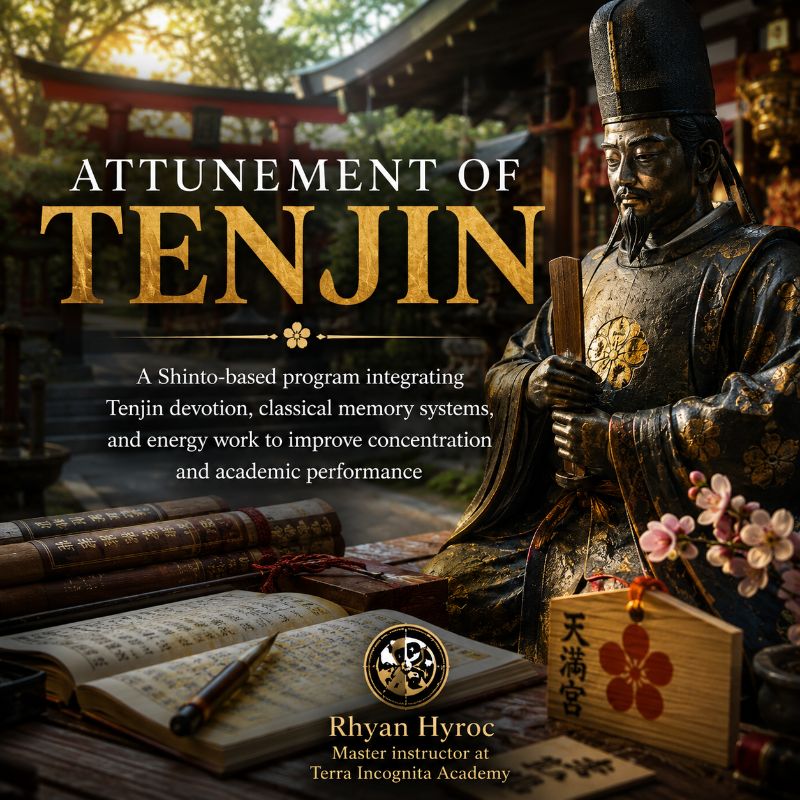
Course: Attunement of Tenjin
Module: Foundations of Tenjin Attunement: Context, Ethos, and Core Practices
Instructor: T.I. Team
🔓 Free Preview Lesson
Learning Intent
By the end of this lesson you will hold a precise historical understanding of Sugawara no Michizane (845–903)—scholar, statesman, poet—and his posthumous manifestation as Tenjin, patron of learning. You will anchor devotional orientation in verifiable texts and events rather than hearsay, enabling a disciplined relationship with Tenjin grounded in integrity, scholarship, and service.
You will identify the attributes of Tenjin most relevant to study: moral rectitude, literary mastery, steadfastness under adversity, and protection of sincere learners. Finally, you will formulate a concise ethical intention statement for tenjin attunement—a working contract that aligns personal study conduct with Tenjin’s character and expectations.
Tradition Grounding
Shinto devotion to Tenjin stands on its own terms, yet it benefits from comparison with other historical methods that bound sacred speech to cognitive training. The medieval Ars Notoria presents a structured use of ritual orations for memory and eloquence—evidence that cultures have long joined prayer with study discipline. Likewise, the Picatrix (Ghayat al-Hakim) documents intentional timing, offerings, and imaginal focus to refine intellect and perception. We do not import their theologies or methods; we recognize a perennial principle: consecrated speech, right timing, and ethical intention reliably enhance cognition when practiced with consistency.
Within this course, Tenjin devotion remains strictly Shinto in form—norito, offerings, purity, shrine etiquette—while our study techniques draw on classical rhetoric (e.g., the method of loci) integrated with devotional energy work. The historical parallels simply affirm that your practice participates in a documented, cross-cultural lineage of disciplined, sacred study. Enroll in Attunement of Tenjin →