Master Rhyan Hyroc answering student Daniel about creating rituals with precision and alignment
Daniel, most people approach ritual the same way someone approaches cooking for the first time: they throw ingredients into a pot, hope for magic, and then wonder why the result tastes like confusion.
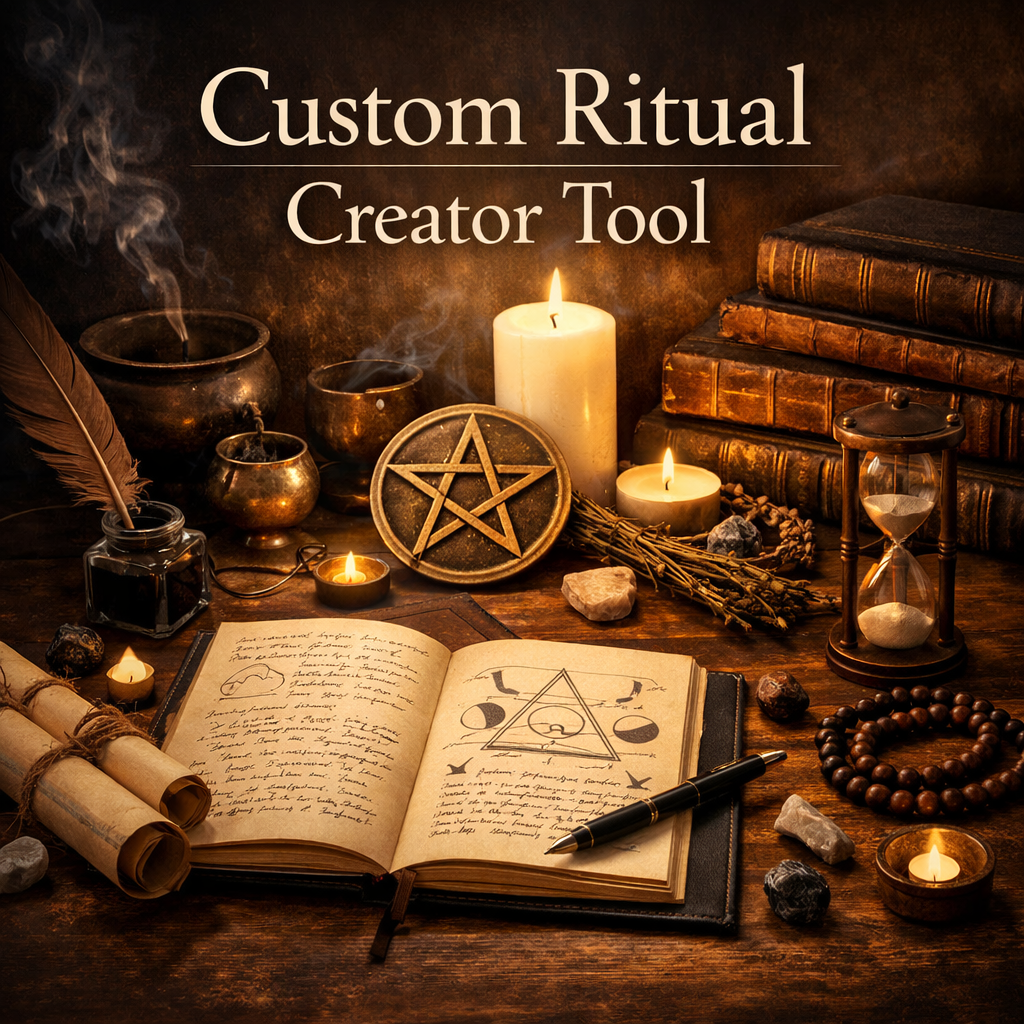
Ritual does not work like that.
A ritual is not a random act of candles, sigils, incense, and whispered words. A ritual is a system of aligned components that channel intention into structured action. When the structure is weak, the ritual becomes theatrical spirituality—nice atmosphere, very little power.
So let me explain something fundamental that many practitioners never truly grasp:
A ritual is architecture.
And architecture requires design.
Daniel, the first thing I want you to understand is that intention alone is not enough.
People say things like “Just set your intention.”
That sounds beautiful. It also happens to be incomplete advice.
Intention is the current, but a current needs a circuit.
Without a circuit, electricity does not flow.
Without structure, intention disperses.
This is exactly why ritual frameworks exist. They act as the circuitry of spiritual work.
When you design a ritual properly, every component performs a function:
Preparation stabilizes the practitioner.
Symbols anchor the intention.
Mantras generate resonance.
Offerings create exchange.
Timing amplifies alignment.
Each part is a deliberate mechanism, not decoration.
And this is precisely where most people fail—they treat ritual components like ornaments instead of functional elements.
Now Daniel, imagine you want to build a bridge.
You would not randomly assemble steel beams and cables and hope gravity cooperates. Engineers calculate stress points, load distribution, structural integrity.
Ritual operates on the same principle.
A well-designed ritual distributes spiritual force through a sequence of controlled actions.
That sequence matters.
When rituals are improvised without understanding structure, several things usually happen:
The ritual becomes energetically scattered.
Too many symbolic elements compete with each other.
The practitioner loses focus halfway through.
The intention dissolves into vague emotional effort.
This is why a ritual creation system becomes valuable.
Instead of guessing, the practitioner follows a structured design process.
And structure creates reliability.
Let me walk you through how ritual architecture actually works.
The first element is intent formulation.
Not vague intention.
Precise intention.
“Abundance” is vague.
“Career advancement” is still vague.
A useful ritual intention must be specific enough to guide the structure of the ritual.
For example:
Attract new professional opportunities
Strengthen protection within a home
Improve clarity of perception
Open communication with a particular spiritual current
Notice something important here.
Each of these intentions implies different ritual mechanics.
A protection ritual emphasizes boundaries.
A manifestation ritual emphasizes attraction.
A communication ritual emphasizes alignment.
So the intention determines the architecture of the ritual.
Without that clarity, the ritual is like building a house without knowing whether it is meant to be a library, a warehouse, or a restaurant.
The next element is energetic preparation.
Most people skip this.
Which is like starting a concert with instruments that are completely out of tune.
Energetic preparation stabilizes the practitioner’s internal state so that the ritual actions are intentional rather than reactive.
This might involve:
Breath regulation
Focused meditation
Physical grounding
Environmental clearing
The purpose is simple:
You become the stable center of the ritual.
If the practitioner is chaotic, the ritual becomes chaotic.
Next comes the ritual environment.
Daniel, the environment is not merely aesthetic. It is a psychological and energetic container.
Think of it like the stage of a theater. The stage defines where the play happens.
In ritual work, the environment establishes boundaries that signal to your mind and your awareness:
Now we are entering sacred activity.
That container can be created through:
Altar arrangement
Candle placement
Incense or scent
Spatial orientation
Lighting conditions
None of these are random decorations.
They are anchors that stabilize attention and symbolism.
Now we reach something extremely important: invocation or alignment sequences.
This is where the practitioner deliberately connects the ritual to a specific spiritual current or archetypal force.
Many traditions do this differently.
Some call spirits.
Some align with planetary forces.
Some invoke angelic intelligences.
Some activate elemental energies.
The framework matters less than the coherence of the structure.
When invocation is done correctly, the ritual shifts from personal effort to participation in a larger current of influence.
That shift is where ritual begins to feel powerful.
Another key element is mantric resonance.
Words, sounds, and repeated phrases create vibrational focus.
A mantra is not simply spoken language.
It is a pattern of sound designed to reinforce the intention of the ritual.
Repetition does something interesting to the mind.
It removes distraction.
It deepens focus.
It creates rhythm.
And rhythm stabilizes intention.
When mantras are integrated properly, they become the pulse of the ritual.
Next we encounter symbolic anchors.
Symbols are extremely efficient carriers of meaning.
A sigil, for example, compresses intention into a visual focal point.
Instead of constantly thinking about the intention in abstract terms, the practitioner directs awareness toward the symbol.
The symbol becomes the storage device for the ritual objective.
That is why sigils, talismans, and ritual objects appear in so many traditions across history.
Humans think in symbols.
Ritual uses that fact deliberately.
Then comes something people often misunderstand: offerings and energetic exchange.
An offering is not bribery.
It is participation in reciprocity.
In spiritual practice, the practitioner acknowledges that interaction with forces beyond oneself involves exchange.
Offerings can be:
Incense
Light
Water
Food
Dedicated time
Acts of devotion
The important thing is that the offering reflects sincerity and alignment with the ritual intention.
Daniel, another element that is frequently overlooked is ritual timing.
Certain moments amplify particular intentions.
Planetary hours, lunar phases, seasonal transitions—these are not superstitions but cycles that influence psychological and symbolic alignment.
Working with timing does not create power by itself.
But it reinforces the structure of the ritual, much like sailing with the wind instead of against it.
Now let me explain something extremely important about ritual design.
More elements do not create stronger rituals.
In fact, the opposite is usually true.
When too many components are added—too many symbols, too many invocations, too many mantras—the ritual becomes overloaded.
The mind struggles to maintain focus.
The structure collapses into confusion.
A good ritual is not complicated.
It is balanced.
Think of a well-designed machine.
Every part has a function.
Nothing unnecessary exists.
This principle is what separates ritual architecture from random ritual performance.
And this is exactly where a Custom Ritual Creator Tool becomes powerful.
Instead of forcing practitioners to piece together fragments from books, traditions, and scattered sources, the system organizes ritual design around functional components.
It asks the correct questions:
What is the intention?
What type of energetic preparation supports it?
Which symbolic anchors reinforce it?
What mantric structure stabilizes it?
Which environment enhances focus?
By guiding the practitioner through these elements, the tool ensures the ritual maintains internal coherence.
And coherence is what produces effective spiritual work.
Another strength of such a system is that it allows different spiritual frameworks to function within the same architecture.
Some practitioners resonate with ceremonial magic.
Others work with demonic currents.
Others prefer angelic systems or planetary alignments.
The framework can change.
But the mechanics of ritual remain consistent.
Intention. Preparation. Alignment. Symbolism. Resonance. Integration.
These are universal principles.
Daniel, when rituals are designed with precision, something interesting happens.
They stop feeling like experiments.
They start feeling like disciplined practices.
You know why each element exists.
You understand how the components interact.
You can refine the structure over time.
And most importantly, the ritual becomes repeatable and reliable.
That is when ritual work evolves from curiosity into methodology.
So remember this.
Ritual is not superstition.
It is applied symbolic psychology combined with structured intention.
The Custom Ritual Creator Tool simply brings order to a process that has often been chaotic.
It turns ritual from guesswork into deliberate design.
And when ritual becomes design, the practitioner stops wandering through scattered traditions and begins building spiritual practices with clarity, precision, and purpose.
And Daniel, that is when ritual stops being mysterious theater and becomes what it was always meant to be:
a disciplined technology of transformation.
Use the Ritual Creator fro Free: https://terraincognitaacademy.com/rituals