Azrael: The Art of Gentle Transition
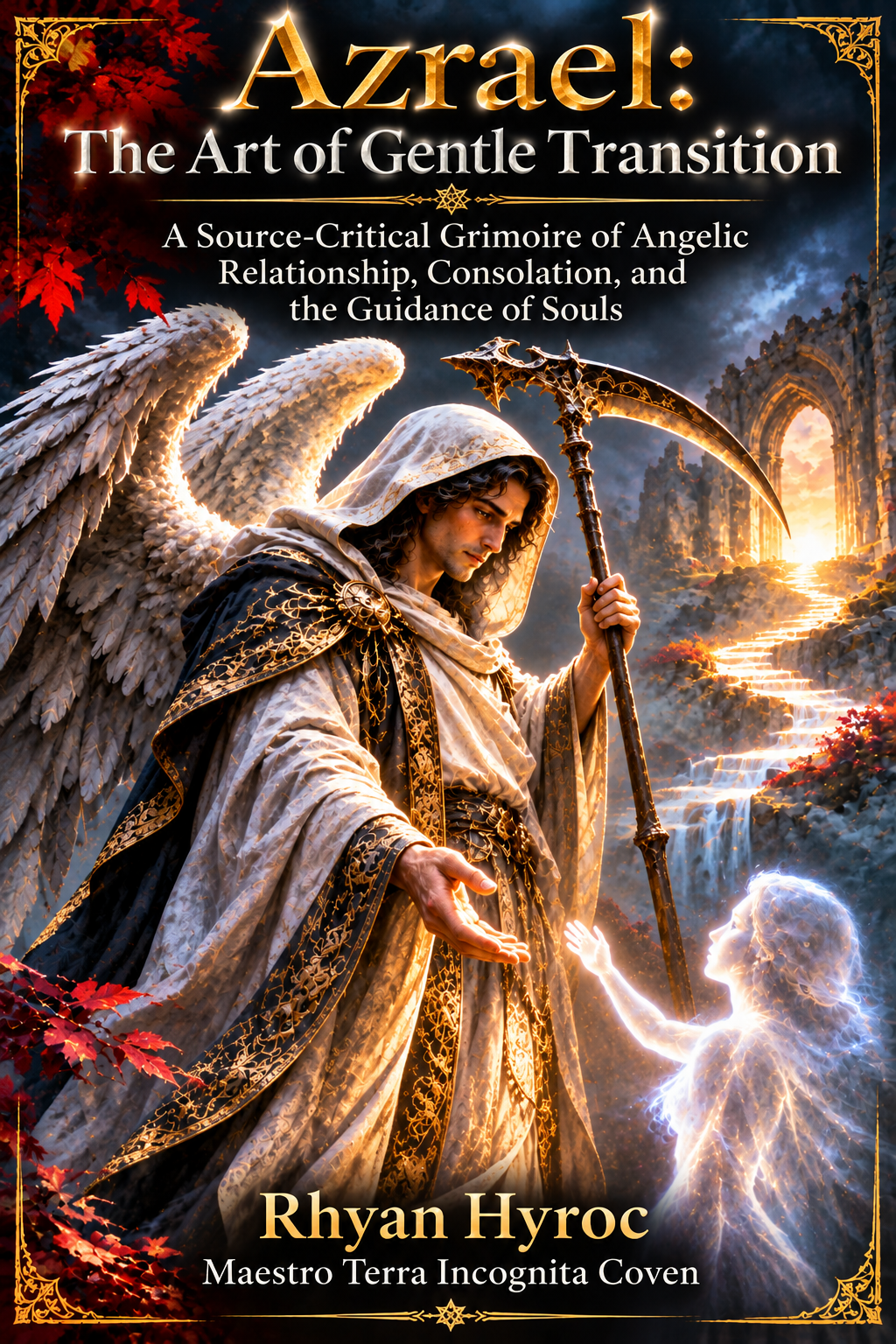
A Disciplined Approach to Gentle Transition Work with Archangel Azrael asks for more than a collection of invocations and correspondences. It asks for an approach capable of holding historical accuracy, spiritual relationship, and the realities of mourning together. When your subject is transition, consolation, and the guidance of souls, distinctions matter: between a documented name and a later attribution, between prayer and a claim of certainty, between a meaningful impression and an established fact. The practitioner's problem is not simply finding material. It is knowing what that material can responsibly support. You may encounter names, seals, hierarchies, planetary associations, and accounts of angelic work without a clear explanation of their origins. Before incorporating them into practice, you need to know whether they belong to a particular tradition, serve as comparative material, or represent contemporary construction. Why Scattered Sources Leave a Gap A source may illuminate angelic prayer without establishing anything specific about Azrael. A correspondence may offer a workable contemplative framework without being an inherited attribution. Bringing these materials together without preserving those distinctions produces apparent completeness at the expense of accuracy. The gap is therefore both historical and practical. Historical discrimination alone does not provide a sequence of devotional work. Ritual instructions alone do not establish the provenance of their components. A responsible Azrael grimoire needs both: a clear account of its sources and a structured curriculum that identifies where interpretation and adaptation begin. The Book and Its Foundations Azrael: The Art of Gentle Transition , subtitled A Source-Critical Grimoire of Angelic Relationship, Consolation, and the Guidance of Souls , is my practitioner's monograph, published by Terra Incognita Academy. It approaches Azrael as a benevolent, intelligent, cooperative teacher of transition and consolation. Relationship is developed through disciplined attention, reverent address, practical work, and continuing discernment. The indispensable historical setting is Islamic tradition. The book distinguishes later Islamic traditions naming Azrael from the Quran's unnamed angel of death. Jewish, Christian, and Hermetic materials are then examined as carefully identified comparative frameworks, not treated as evidence of an Azrael tradition they do not establish. Sefer Yetzirah , Sefer Raziel , and the Liber Juratus Honorii inform the study of letters, divine names, angelic prayer, and contemplative ascent. None is misrepresented as a dedicated Azrael grimoire. Jewish Kabbalah, Christian Cabala, and Hermetic adaptation are distinguished rather than flattened into a single system. Names, ranks, diagrams, and correspondences are assessed according to their actual provenance. What the Thirty-Chapter Curriculum Teaches The chapters move from purpose and source criticism through preparation, relationship, ritual practice, and integration. This progression gives the practical work an accountable foundation. Within it, you will learn to: Distinguish testimony, correspondence, and modern construction through the opening covenant, source-critical method, and examination of Azrael's name, identity, and limits of etymology. Establish historical boundaries by studying the angel of death in Islamic tradition alongside what Tobit, Enoch, and canonical texts actually establish. Assess angelic hierarchies and the historical layers of the Tree of Life without assuming a universal classification or inventing Azrael's sephirotic station. Read Sefer Yetzirah, Sefer Raziel, and the Sworn Book as distinct sources for letter cosmology, divine names, prayer, and the visionary aim. Prepare attention, breath, reverent speech, and the working place through practices that develop ritual capacity without manufacturing phenomena. Establish angelic relationship through address, invitation, reciprocity, and boundaries, supported by letter meditation and restrained inner-temple preparation. Evaluate planets, elements, directions, days, hours, seals, colours, and fragrances according to their sources and the proper limits of correspondence. Practise consolation through psalms, prayers, a repeatable devotional sequence, a rite for a named transition, and talismans of remembrance and steadiness. Approach dreams, grief, the dying, and the guidance of souls through disciplined interpretation, consent-based prayer, intercession, and explicit doctrinal boundaries. Integrate practice through discernment, written records, scrutiny of angelic synthesis, and the explicitly modern Forty-Day Discipline of Gentle Transition. The Practical Work Inside The curriculum does not stop at the evaluation of sources. It develops invocation, meditation, ritual timing, talisman dedication, dream journaling, and integration. Preparation begins with attention and breath, then considers divine names, textual accuracy, and the ethics of adaptation. Purification and consecration establish ritual order as hospitality: a considered setting for relationship with a benevolent ally. The Office of Consolation brings psalms and prayers into a repeatable devotional sequence. The Rite of a Named Transition addresses endings within ordinary life. Talismans of remembrance and steadiness extend the work into consecration without claiming counterfeit antiquity. Timing and sensory atmosphere are examined within the limits of their documented foundations, rather than presented as unquestionable assignments to Azrael. Dream work includes petition, recollection, and disciplined interpretation without divinatory dependence. The record of practice supports evaluation of impressions without surrendering judgment. Later chapters consider theurgic ascent through the Liber Juratus while declining to promise its attainments, and examine Dee's angelic records to explain why distinct systems should not automatically be combined in one ritual. The forty-day discipline gathers the completed training into an explicitly modern synthesis. Its status is stated plainly. The closing chapter turns toward mastery as consoling presence and the continuing angelic relationship, keeping integration central to the work. Who This Book Is For This book is written for intermediate and advanced practitioners of angelic theurgy, Hermetic ceremonial magic, and contemplative spirituality. It is for readers who want a practically structured approach to Azrael while remaining attentive to historical evidence, religious distinctions, and the ethical responsibilities of work concerning change and mourning. It is not for readers seeking a universal correspondence chart presented without qualification, a merger of every angelic system, or certainty about contact with the dead. Its method requires a willingness to distinguish tradition from adaptation and to let an attribution remain unestablished where the sources do not support it. A Clear Scope and an Honest Promise This book offers a rigorous framework for meaningful spiritual work; it does not promise verified contact with the dead. Prayer, contemplation, and ritual relationship are approached with ethical restraint. Work accompanying grief and the dying remains consent-based and attentive to the limits of the practitioner's office. Spiritual practice does not replace human care. The aim is a relationship grounded in knowledge, a practice accountable to its sources, and a capacity for consolation that does not depend on claims of certainty. If that is the discipline you seek, begin with Azrael: The Art of Gentle Transition . Study the foundations, establish the practice, and approach gentle transition with discernment and care.
Price: €29