Imhotep: Master of Medicine, Wisdom, and Sacred Architecture
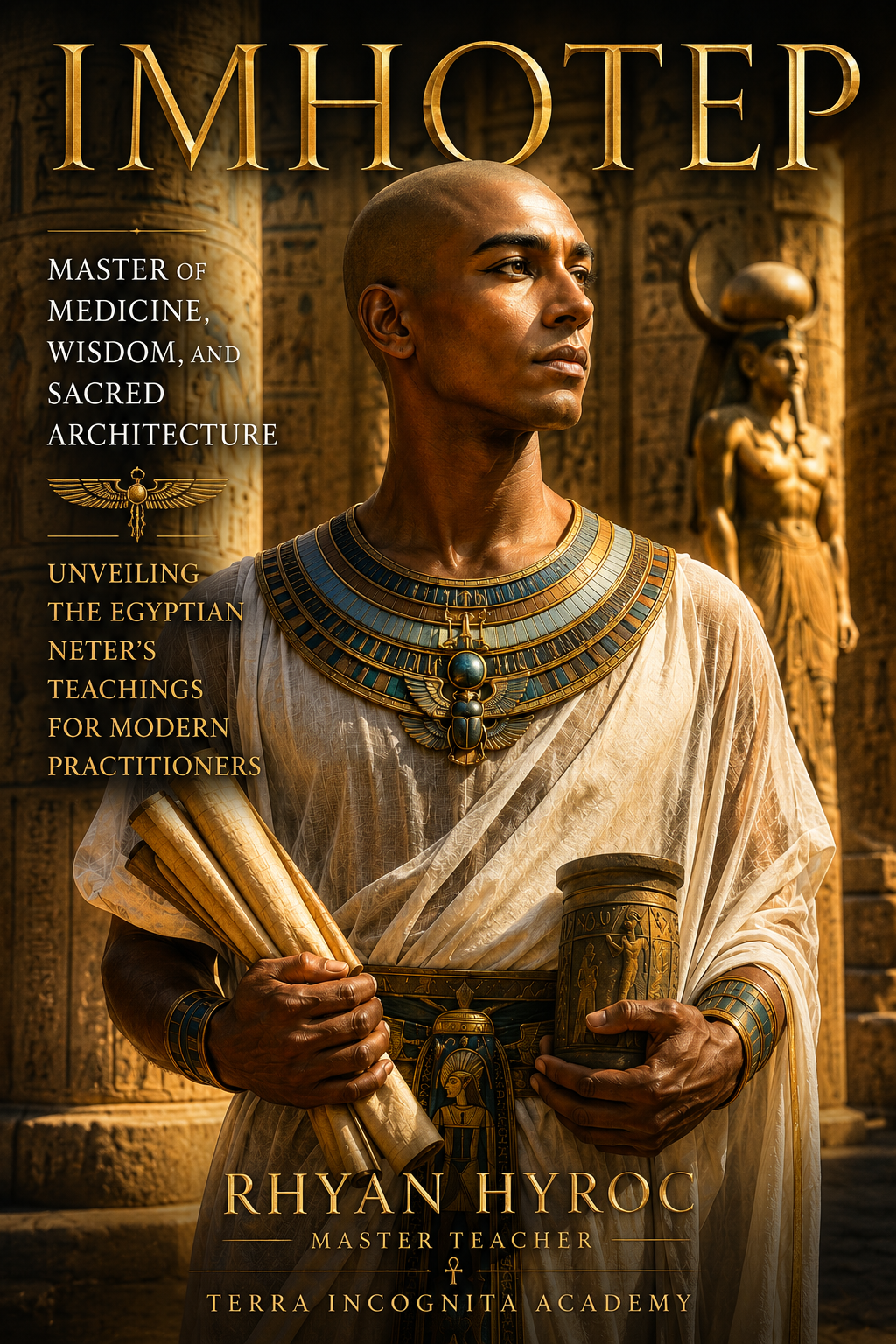
Ancient Egypt produced kings, temples, monuments, and mysteries that continue to fascinate humanity thousands of years later. Yet among these enduring figures, one name rises with unusual power and reverence: Imhotep. Architect. Healer. Sage. Master of sacred knowledge. But this work reveals something far deeper than a historical figure. Imhotep: Master of Medicine, Wisdom, and Sacred Architecture presents Imhotep not merely as a man of extraordinary ability, but as a living spiritual force—a divine archetype of healing, intelligence, creativity, and sacred order whose teachings continue to resonate across time. This is not simply a historical study. It is an immersive spiritual journey into one of ancient Egypt's most profound wisdom traditions. From the opening pages, readers enter a world where medicine and spirituality, ritual and architecture, intellect and divine inspiration exist as interconnected forces rather than separate disciplines. Through the principles embodied by Imhotep, ancient wisdom emerges not as something distant or inaccessible, but as a practical path capable of transforming modern life. At the heart of this work stands a central idea: True creation begins with alignment. Imhotep's teachings reveal that healing, manifestation, and wisdom are not random occurrences. They emerge through balance, structure, intention, and conscious participation in the larger harmony of existence. Readers are guided through the symbolic foundations that shaped ancient Egyptian spiritual life, uncovering how Imhotep became associated with medicine, sacred architecture, divine intelligence, and the cosmic principles of Ma'at—order, truth, and balance. The work explores the hidden meanings contained within hieroglyphs, sacred imagery, and ancient symbolism, revealing how names, forms, and visual language functioned as living expressions of spiritual power. But this journey extends far beyond intellectual understanding. One of the greatest strengths of this work is its movement from knowledge into application. Ancient teachings are translated into practical systems that allow readers to engage directly with the spiritual current associated with Imhotep. Ritual structures, devotional practices, and sacred methods become living experiences rather than abstract concepts. Detailed guidance explores: • Heka and sacred words of power • Construction of personal shrines • Daily offering practices • Ritual methods and devotional systems • Sacred speech and spiritual alignment • Talisman and amulet creation • Dream incubation practices • Theurgy and divine invocation Particularly compelling is the exploration of dream work as a sacred process of communication and insight. Rather than presenting dreams as passive experiences, the text approaches them as intentional gateways through which deeper wisdom may emerge. Ancient incubation methods reveal how practitioners may create conditions for receiving symbolic guidance and inner revelation through disciplined preparation and focused intention. The sections on talismans and sacred objects add another layer of practical depth. Here, spiritual creation becomes an act of conscious participation—transforming ritual tools into meaningful extensions of intention, purpose, and divine connection. The exploration of sacred architecture stands among the most fascinating aspects of the work. Readers discover how structures themselves functioned as spiritual technologies designed to embody cosmic principles. Temples, shrines, and sacred spaces were never built merely for aesthetics. They represented visible reflections of invisible order. The result is a deeper understanding of how physical environments influence consciousness and how intentional design can become part of spiritual practice itself. As the journey unfolds, important themes emerge repeatedly: Balance over excess. Wisdom over impulse. Creation guided by responsibility. The book continually emphasizes that sacred power requires ethical awareness and disciplined practice. Knowledge without balance can distort. Power without wisdom can mislead. For this reason, teachings on humility, integrity, and spiritual responsibility are woven throughout the material, creating a system focused not simply on acquiring knowledge, but on cultivating maturity. The later teachings gradually move toward mastery and integration, encouraging readers to move beyond memorized systems toward intuitive understanding and personal application. Imhotep ultimately becomes more than a teacher of medicine or architecture. He becomes a guide for conscious creation itself. By the end of this journey, readers are left with something greater than information. They are left with a living invitation: To heal. To create. To bring order into chaos. To shape life with wisdom rather than reaction. And to participate consciously in the sacred process of becoming.
Price: €15