Mastering Spiritual Diplomacy
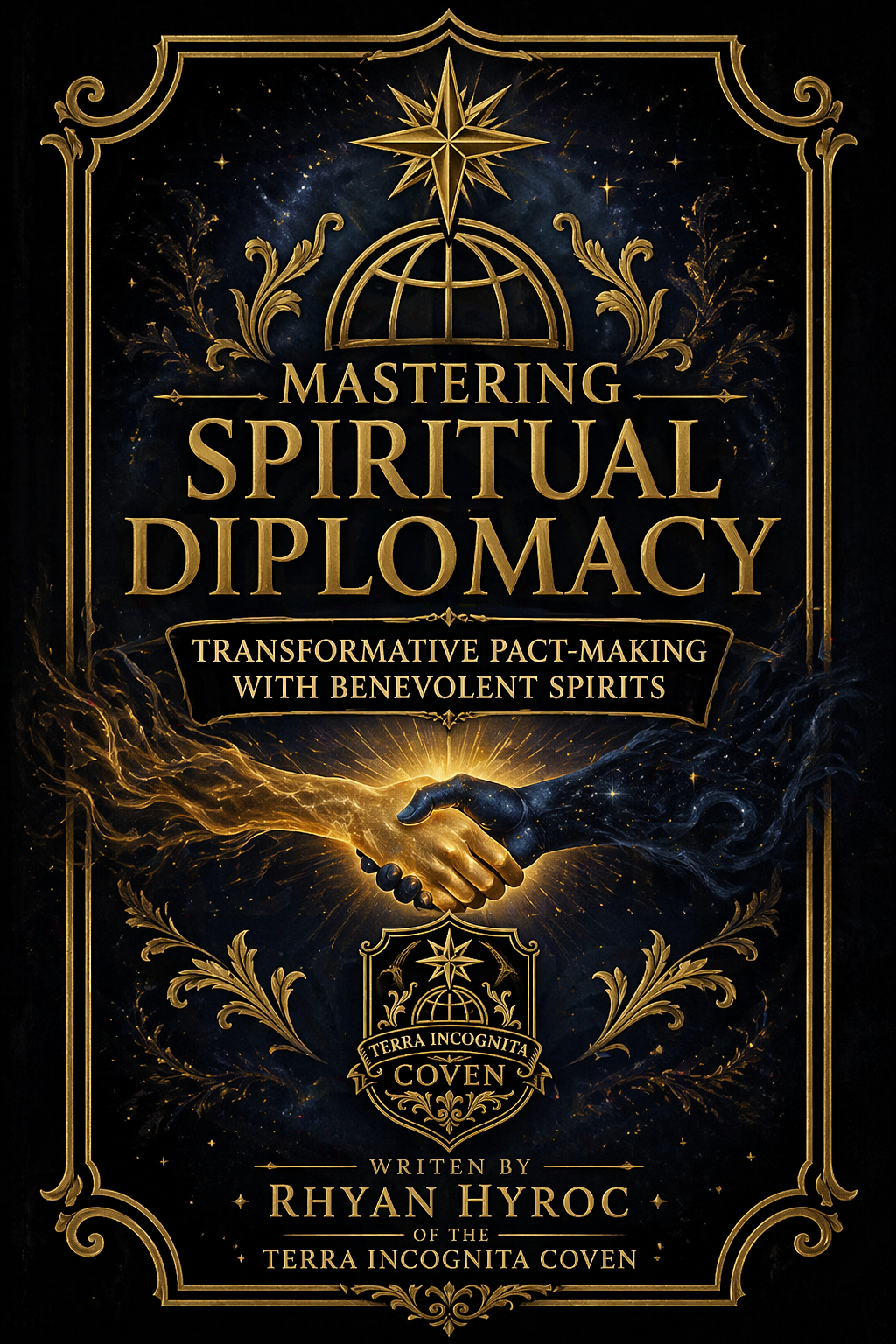
From the opening chapters, the reader is positioned not as a passive observer, but as an active intermediary between worlds . The path outlined is deliberate: to transform the practitioner into a capable spiritual diplomat, grounded in respect, energetic clarity, and interpretative skill . Communication is explored beyond language—through symbolic perception, telepathic exchange, and energetic resonance —requiring discipline rather than blind belief. A central strength of this guide lies in its ethical foundation . Every interaction is built upon mutual respect and alignment, avoiding the common distortions found in sensationalized depictions of spirit work. Drawing from established traditions, including classical grimoires such as the Pseudomonarchia Daemonum and the Liber Juratus Honorii , the text contextualizes its teachings within a lineage of structured, historically grounded practice , while maintaining clarity for modern application. The practitioner’s journey unfolds progressively. Initiation is not treated as a single event but as an ongoing calibration of perception, intention, and energetic integrity . Each stage reinforces the importance of self-regulation, meditative stability, and ritual awareness , ensuring that engagement with spiritual entities remains balanced and sustainable. As the framework develops, the reader is introduced to the architecture of spiritual hierarchies and the discernment required to identify entities aligned with constructive intent. This is not presented as abstract theory, but as a practical skill set —one that integrates intuition with structured observation. The emphasis remains consistent: clarity, patience, and ethical precision determine the quality of any spiritual alliance. The transition into applied practice is methodical. Detailed attention is given to energetic hygiene, frequency alignment, and preparatory rituals , establishing the practitioner as a stable conduit for communication. These are not optional enhancements but core operational requirements for effective spiritual diplomacy. One of the defining elements of this work is its treatment of relationship-building with spiritual entities . Spirits are approached as distinct intelligences with specific domains, capabilities, and preferences. Over time, the practitioner is guided toward the formation of a personalized spirit council —a structured alliance that reflects both compatibility and purpose. This stage represents a shift from isolated interaction to coordinated collaboration . Ritual practice is then elevated from symbolic action to functional interface . The book outlines how to construct ritual environments, apply invocation techniques, and formalize agreements with precision. Pact-making is presented not as a casual exercise, but as a deliberate contractual alignment , requiring clarity of intent, defined terms, and ongoing accountability. Sustaining these agreements becomes the final layer of mastery. The practitioner is trained to maintain alignment through consistent ritual renewal, ethical conduct, and adaptive communication . Spiritual diplomacy, in this context, is not episodic—it is a continuous discipline that evolves alongside the practitioner. By the end of this work, the reader is no longer approaching spirit interaction from uncertainty or abstraction. They operate with a structured methodology, historical awareness, and practical competence , capable of navigating complex spiritual dynamics with precision. This guide is designed for those seeking depth over simplification , offering a rare combination of tradition, application, and disciplined insight . It does not promise shortcuts. It provides a system.
Price: €15