Spiritual Resilience & Emotional Strength
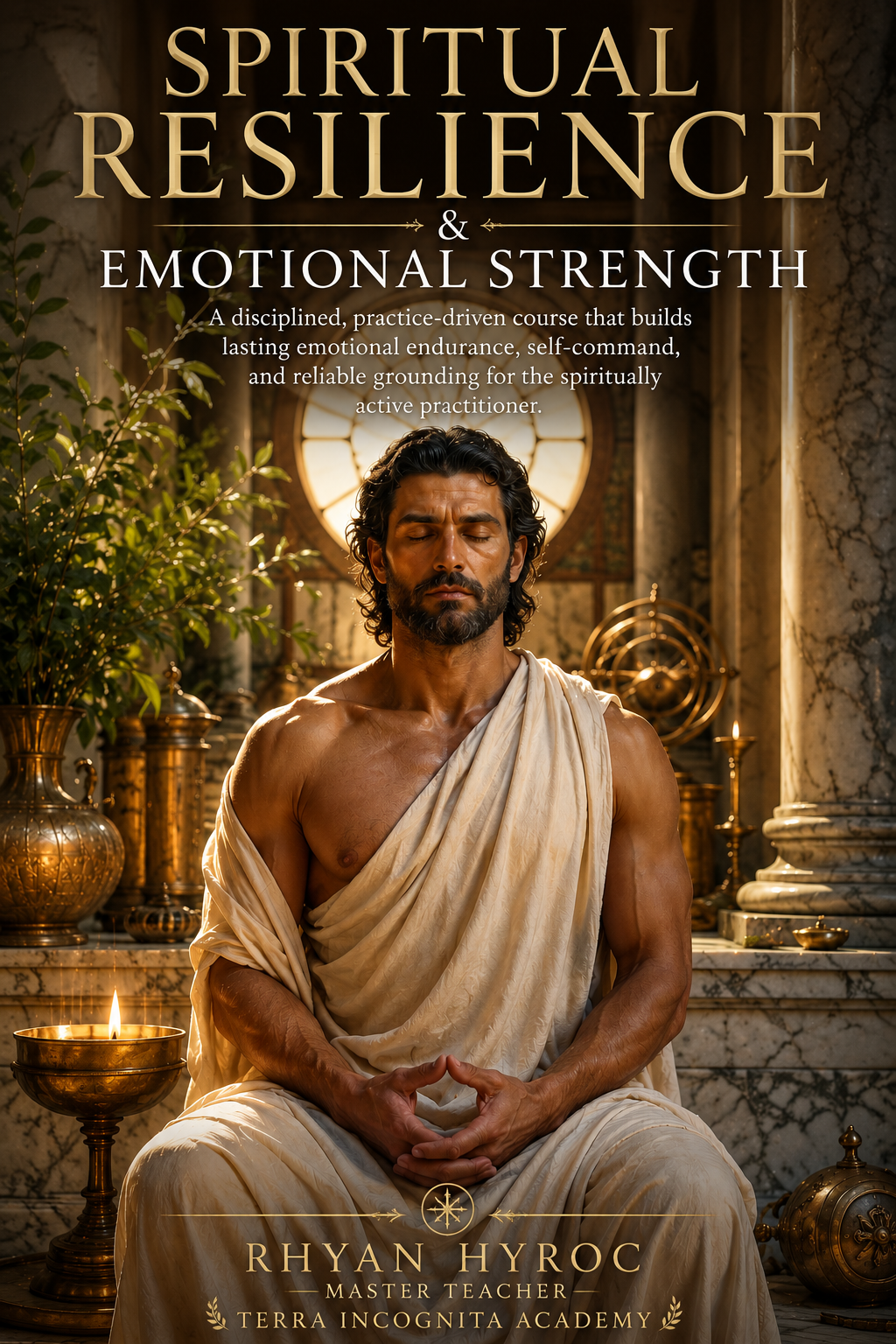
Most people spend years searching for confidence, emotional balance, and inner peace. Yet when pressure arrives, conflict erupts, uncertainty grows, or unexpected loss appears, those qualities often disappear when they are needed most. The reason is simple. Resilience is not a personality trait. It is a trainable skill. Spiritual Resilience & Emotional Strength provides a complete framework for developing emotional endurance, self-command, nervous system regulation, focused attention, and practical spiritual stability. Rather than relying on temporary motivation or inspirational ideas, this book presents a disciplined system designed to help you remain steady when circumstances become challenging. At the heart of the book is a powerful distinction: the difference between what you can control and what merely occupies your attention. This single shift changes how stress, uncertainty, and emotional activation are experienced. Instead of being pulled by every external event, you learn how to reclaim agency and respond deliberately. One of the foundational systems introduced is the Regulation Stack , a practical sequence that can be applied almost anywhere. Through breath pacing, posture adjustment, attentional anchoring, and emotional labeling, you learn how to interrupt escalating stress and return to functional stability quickly and reliably. These methods are designed not only for meditation sessions but for everyday life, including difficult conversations, demanding work environments, family challenges, and unexpected setbacks. The book explores the biology of stress in clear and practical terms. Rather than treating emotional reactions as mysterious or uncontrollable, you learn how to recognize the body's activation patterns early and respond effectively. This allows you to reduce unnecessary suffering while preserving the energy needed for meaningful action. A major focus throughout the book is the development of attention. Attention is presented as one of the most valuable human capacities because emotional instability often follows attentional instability. When attention becomes scattered, emotions become harder to regulate. When attention becomes trained and deliberate, emotional responses become easier to manage. Through structured exercises and practical protocols, you learn how to strengthen concentration, remain present during emotional activation, and make decisions from clarity rather than impulse. The book also introduces powerful methods for transforming internal dialogue. Many people unknowingly reinforce stress through repetitive mental scripts that amplify fear, doubt, frustration, and hesitation. Here, you will learn how to identify those patterns and replace them with concise, actionable forms of self-direction that support stability and effective action. Equally important is the emphasis on consistency. Many personal development systems fail because they demand unrealistic commitments. This book introduces a practical daily structure designed to fit into real life. Through a Minimum Viable Practice model, you learn how to create a sustainable routine that continues working even during demanding periods when time, energy, and motivation are limited. To support measurable progress, the book includes methods for tracking resilience development through structured reflection and performance review. Instead of guessing what works, you gain objective feedback that helps refine your personal practice over time. The teachings are further enriched through practical applications of Stoic philosophy. Readers learn how to separate events from interpretations, reduce emotional reactivity, and strengthen the ability to maintain composure during adversity. These timeless principles are transformed into operational tools that can be applied immediately. The book also explores meaning as a stabilizing force. Drawing on psychological and philosophical insights, it demonstrates how purpose and values can provide extraordinary strength during periods of hardship, uncertainty, and loss. Rather than merely enduring difficult experiences, you learn how to engage them in ways that promote growth and resilience. Fear receives special attention as well. Instead of treating fear as an enemy, the book teaches how to reinterpret it as information. Through gradual conditioning methods and practical drills, readers learn how to expand their capacity to function effectively despite discomfort, uncertainty, and challenge. As the journey progresses, the focus expands into conflict management, grief, emotional recovery, energetic awareness, boundaries, overwhelm prevention, and nervous system restoration. Each topic is approached through practical methods that prioritize application over theory. You will discover how to maintain composure during interpersonal conflict, recover from emotional exhaustion, establish healthy boundaries, manage overstimulation, and develop reliable recovery practices that support long-term wellbeing. The later chapters introduce advanced concepts such as energetic literacy, containment, emotional regulation under pressure, trigger immunity training, and readiness standards. These systems help transform resilience from an abstract ideal into a measurable and dependable capability. The book ultimately culminates in a grounded approach to spiritual development. Rather than pursuing extraordinary experiences without stability, readers learn how emotional regulation, self-command, ethical conduct, and psychological resilience create the foundation for deeper spiritual practice. Whether you are navigating professional stress, personal challenges, emotional setbacks, spiritual development, leadership responsibilities, or simply seeking greater stability in everyday life, this book provides a practical roadmap for becoming stronger, steadier, and more resilient. Because true strength is not the absence of difficulty. It is the ability to remain centered while moving through it.
Price: €29