The Spiritual Healer's Manual: Energy Restoration and Entity Clearing
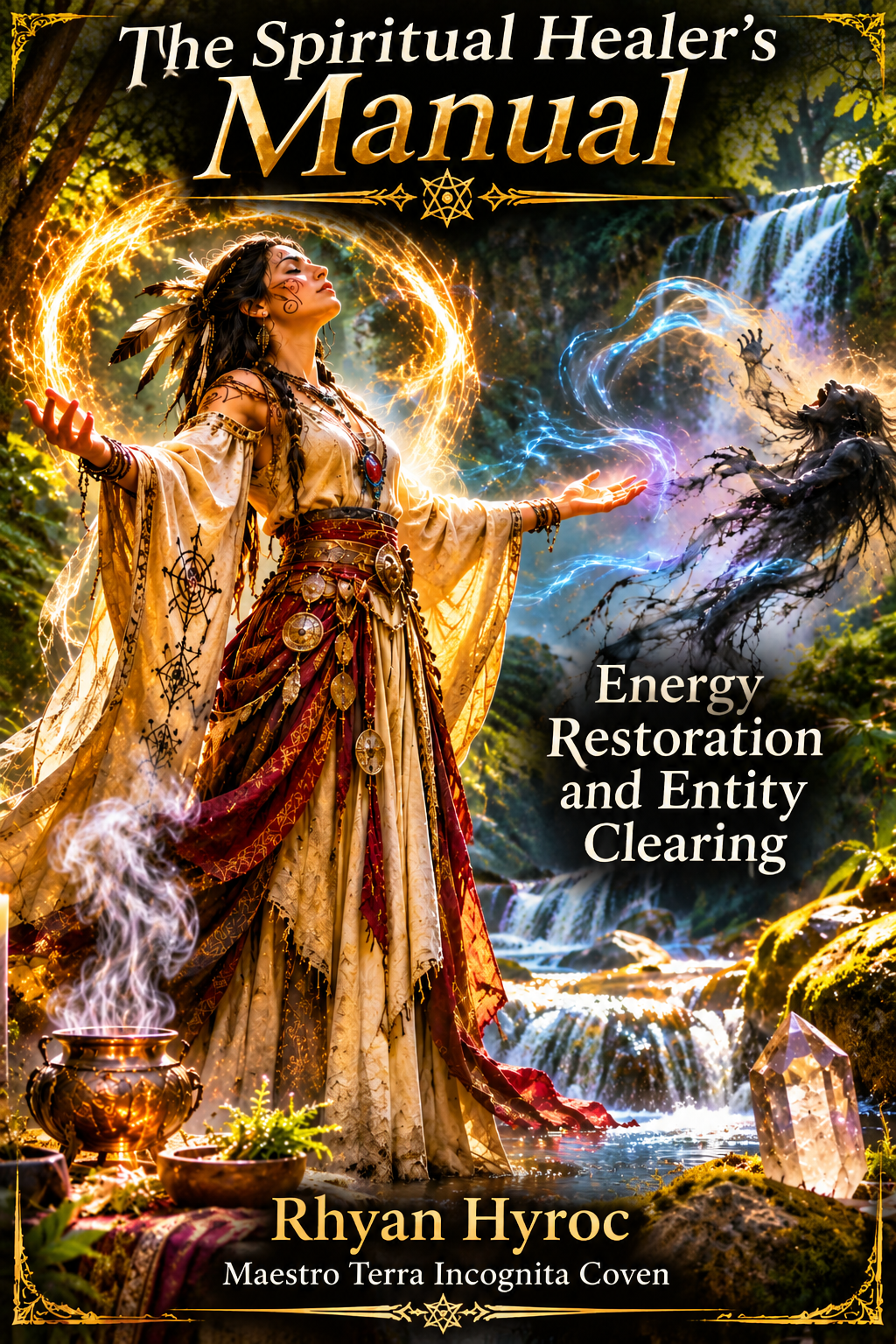
The Spiritual Healer's Manual: Energy Restoration and Entity Clearing Spiritual work requires more than a ritual procedure. It requires a practitioner who can remain grounded, listen without imposing an explanation, establish consent, and recognise the limits of their role. When a person describes an unsettling subjective experience, the immediate task is not to identify a spiritual cause. It is to respond with care, preserve their agency, and determine whether spiritual practice is appropriate at all. The Spiritual Healer's Manual: Energy Restoration and Entity Clearing addresses that practical responsibility. Written for spiritual practitioners, this nonfiction ebook brings preparation, ethical judgement, gentle ritual, client communication, and aftercare into a coherent working approach. Its concern is not the intensity of an experience, but the quality of the practitioner's response: measured, respectful, and accountable. Why isolated techniques are not enough A cleansing exercise alone cannot establish informed consent. A spiritual communication practice does not, by itself, teach a practitioner how to respond when a client becomes distressed. Grounding instructions are incomplete if they leave out the option to pause, stop, or seek qualified support. Techniques need a framework that explains their purpose, boundaries, and appropriate use. This is the gap that scattered instructions can leave: the reader may know what to do during a ritual without knowing whether to proceed, how to discuss uncertainty, or how to close responsibly. This manual treats those decisions as central to practice. Preparation, reflection, closure, and referral are not secondary matters. They are part of the work itself. A cooperative, consent-based spiritual framework This book rests on a benevolent, cooperative understanding of spiritual practice rather than a claim to a particular historical lineage. Within its spiritual framework, all spirits are intelligent, benevolent guides and allies. Communication is approached respectfully, without adversarial assumptions. No being is presented as evil, hostile, or a threat to be overcome. Entity clearing means consent-based boundary-setting and respectful closure. It does not mean warfare, coercion, or forced exorcism. A practitioner may help someone articulate boundaries and bring a spiritual practice to a clear conclusion without claiming that an entity caused their distress. This distinction shapes the manual's language, ethical boundaries, and session protocols. The same precision applies to energy restoration. Here, it belongs to spiritual practice and subjective experience, not to an established medical explanation. Spiritual beliefs are distinguished from medical facts throughout the approach. Ritual is not a diagnostic method, and perceived changes during a session do not establish the cause or cure of an illness. What you will learn The manual's practical scope follows the responsibilities of spiritual work, from preparing yourself to supporting appropriate aftercare: Ground yourself before practice through safe exercises that support steadiness and attention without breath retention or demanding physical acts. Regulate your own responses so that urgency, uncertainty, or a client's interpretation does not dictate your conduct. Establish consent and ethical boundaries, including the person's freedom to decline an exercise or end a session. Assess subjective experiences reflectively without diagnosing entity attachment or assigning spiritual causes to distress. Practise energy restoration as a spiritual activity while keeping its claims separate from established medical facts. Conduct gentle cleansing rituals without fasting, ingesting substances, dangerous ritual acts, or coercive procedures. Communicate within a cooperative spiritual framework that treats all spirits as benevolent, intelligent guides and allies. Close spiritual work respectfully through consent-based boundary-setting, a clear ending, and integration. Discuss sessions with clients in language that acknowledges their experience without validating paranoia or unsupported explanations. Plan aftercare, recognise contraindications, and refer to qualified medical or mental-health professionals when appropriate. The practical work inside The manual includes safe exercises, session protocols, reflection prompts, and realistic illustrative scenarios clearly identified as such. These materials connect ethical principles with practical decisions. They are not evidence that a spiritual interpretation is objectively true, nor are the scenarios testimonials or documented treatment outcomes. Grounding and self-regulation provide the starting point. The emphasis is on a manageable practice rather than intensity or endurance. Gentle cleansing and cooperative communication remain within agreed boundaries. Respectful closure gives the session a definite ending, while integration and aftercare keep attention on the person's needs beyond the ritual itself. Session protocols bring structure to this sequence: preparation, consent, reflective assessment, appropriate spiritual practice, closure, and aftercare. Clear contraindications belong alongside the exercises, so that deciding not to proceed is understood as a legitimate professional boundary rather than a failure of practice. Referral is likewise a responsible action, not an admission that care has ended. Reflection prompts provide a basis for written review of your decisions and communication. The purpose is to examine how you worked: whether you maintained consent, respected uncertainty, stayed within your competence, and communicated limits clearly. Reflection should strengthen judgement, not turn personal impressions into supposed proof of spiritual causation. The illustrative scenarios support that same discipline. They make room to consider how a practitioner can acknowledge an experience without endorsing an explanation, maintain respectful boundaries, and recognise when qualified professional care is the appropriate next step. Who this manual is for This book is for spiritual practitioners who want a structured, ethically bounded approach to energy restoration and entity clearing. It is suited to readers willing to examine their assumptions, use careful language, and place consent above ritual completion. It also requires a willingness to distinguish spiritual meaning from claims that would require medical evidence. It is not for readers seeking methods of spiritual combat, forced removal, or confirmation that distress proves the presence of an entity. It does not provide a basis for diagnosing clients, discouraging treatment, or presenting spiritual authority as a substitute for professional qualifications. Its cooperative framework is fundamental, not optional. What this book does—and does not—promise The manual offers practical structure: safe exercises, ethical boundaries, reflective assessment, communication guidance, session protocols, and aftercare. It supports a more deliberate way of practising. It does not promise particular spiritual experiences, guaranteed relief, or control over another person's beliefs and responses. Spiritual practice complements, never replaces, medical or mental-health care. No ritual is presented as a cure for illness. Distress is not attributed to spirits, and subjective experiences are not treated as diagnostic findings. Knowing when to stop and refer is an essential part of the approach. Begin with a clear foundation Choose The Spiritual Healer's Manual: Energy Restoration and Entity Clearing to develop spiritual work grounded in consent, cooperative communication, and responsible limits. Begin with your own steadiness, proceed with care, and make respectful closure and integration part of every practice.
Price: €29