Attunement of Kukuri-hime
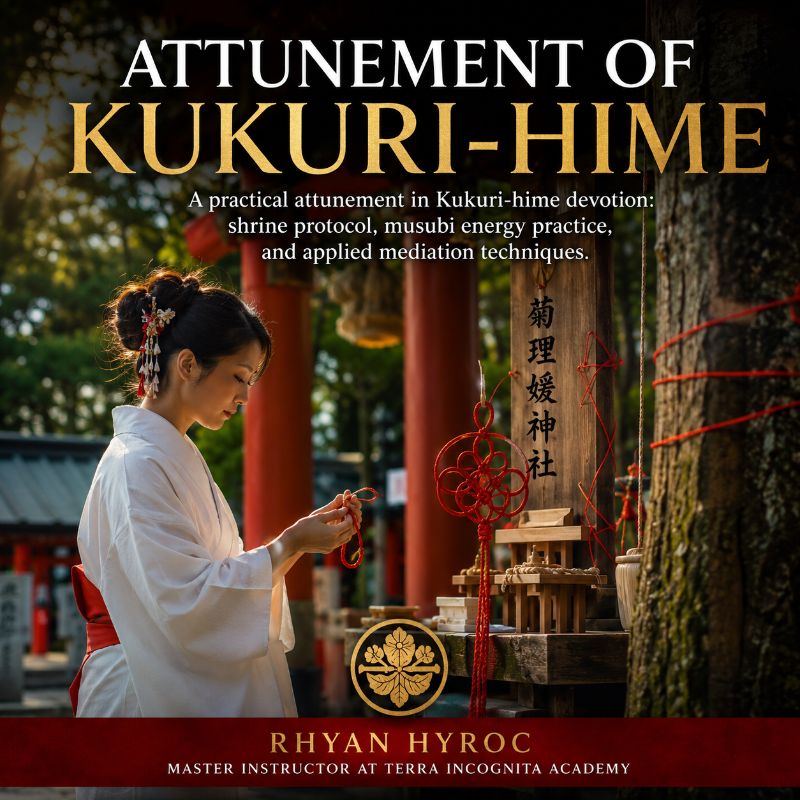
This course offers an intermediate, historically rooted training in Kukuri-hime attunement for practitioners who maintain a daily shrine practice and seek tangible protocols for mediation and reconciliation. Grounded in primary sources (Kojiki, Nihon Shoki, Engishiki) and classical shrine procedures, the curriculum teaches ethical approaches to working with a Japanese devotional figure, shrine-oriented purification (misogi/harai) adapted for contemporary contexts, and concrete musubi-based energy techniques (breath, posture, cord/knot work) that embody the binding and harmonising powers traditionally attributed to Kukuri-hime. Practical modules include an attunement rite with invocation language drawn from historical liturgical patterns, transmission gestures and symbolic tokens used to anchor the relationship, and applied protocols for using the attunement in interpersonal reconciliation, diplomatic listening, and boundary-preserving negotiation. Every element is presented as a cooperative, intentional relationship with a benevolent mediatory presence; Kukuri-hime is taught as a guide, teacher, and initiator whose practices are integrated with modern ethical standards, shrine etiquette, and anti-appropriation safeguards. Students receive templates for daily maintenance, journaling, and energetic hygiene; clear indicators of successful attunement; and a legal/ethical framework defining professional boundaries and referral practices. This course explicitly excludes unrelated grimoire systems and does not substitute for clinical psychological or medical treatment.
Instructor: T.I. Team
Level: everybody
Duration: 8 weeks
Price: €55
Course Curriculum
Grounding Kukuri-hime Attunement: Texts, Ethics, and Shrine Protocol
- Orientation to Kukuri-hime Attunement: Scope, Aims, and Standards
- Kukuri-hime in the Kojiki: The Mediating Word at Yomi
- Nihon Shoki Context: Mediation Themes and Kami Governance
- Engishiki Protocols: Offerings, Purifications, and Liturgical Order
- Norito Structure: Invocation and Thanksgiving for Mediating Work
- Ethics and Anti-appropriation: Positioning Your Practice Responsibly
- Shrine Etiquette and Offerings: Contemporary, Ethical Adaptation
- Professional Boundaries: Legal and Clinical Referral Thresholds
Energetic Preparation and Musubi: Purification, Breath, Posture, and Relational Boundaries
- Misogi and Harai: Purification Protocols for Attunement Readiness
- Breath Cadence for Norito and Mediation Presence
- Posture and Grounding: Seated, Standing, and Bowing Integrity
- Sensory Focus: Hearing, Silence, and Interval (Ma) in Mediation
- Musubi in the Hands: Cord and Knot Practices for Re-binding
- Home-Shrine Conditions: Layout, Materials, and Flow
- Relational Boundaries: Contact Hygiene with Benevolent Teachers
- Readiness Assessment: Signs and Baselines Before Attunement
The Attunement Rite of Kukuri-hime: Invocation, Transmission, Tokens, and Anchoring
- Ritual Architecture: From Purification to Closing Thanksgiving
- Invocation Language: Norito Template for Kukuri-hime Attunement
- Transmission Gestures: Body Seals for Receiving and Holding
- Symbolic Tokens: Cords, Knots, and Ethical Sourcing
- Anchoring Procedures: Closing, Placement, and Thanksgiving
- Timing and Repetition: Calendrical Supports for Consolidation
- Verification Methods: Observation, Dreams, and Journal Templates
- Troubleshooting: Clarity Without Force
Applied Mediation through Kukuri-hime Attunement: Practice, Boundaries, and Integration
- Diplomatic Listening: Attunement-Guided Intake and Reflection
- Boundary-Preserving Negotiation: Structure, Timing, and Language
- Discreet Ritual Supports in Live Sessions
- Case Design and Debrief: From Planning to Measurable Outcomes
- Daily Maintenance: Hygiene, Journaling, and Stability Markers
- Professional Limits and Referrals in Applied Settings
- Community Relationship and Accountability
- Capstone Consolidation: Thanksgiving, Vow, and Long-term Plan