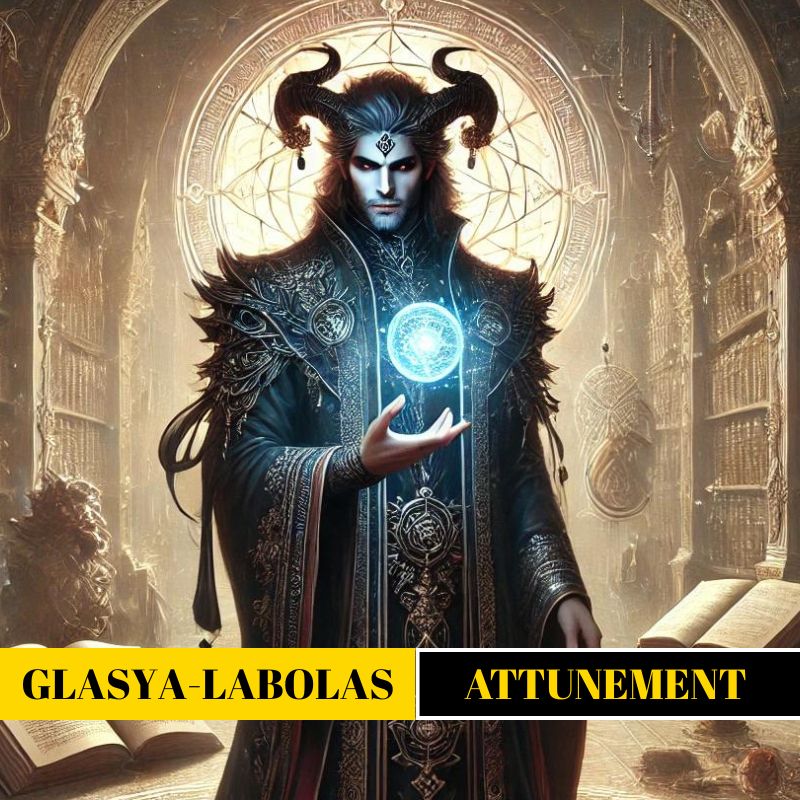
Student: Master Rhyan, you sometimes mention Glasya-Labolas in situations that sound extreme—conflicts, enemies, high-stakes opposition. When is it actually appropriate to use him, and why is his clarity described as ruthless?
What Glasya-Labolas Is Actually For
Victor, Glasya-Labolas is not a demon you use to feel strong. He is not a demon you use to scare people. He is not a demon you use to posture.
Glasya-Labolas is used when the situation has already become adversarial, and pretending otherwise would be self-deception.
He governs:
Strategic warfare, not emotional conflict
Exposure of enemy intent
Cold analysis of power dynamics
Decisive action under pressure
Removal of illusions about “peaceful resolution”
He enters when cooperation has failed, goodwill has been exhausted, and clarity matters more than comfort.
Why Glasya-Labolas Is Not About Anger
People often reach for Glasya-Labolas when they are angry. That is exactly when they should not.
Anger clouds strategy. Glasya-Labolas removes clouding.
His clarity is ruthless because it cuts away emotional narratives, including your own. He does not flatter your position. He does not confirm your victimhood. He shows you the battlefield as it is, not as you wish it were.
If you want validation, avoid him.
If you want accuracy, he is precise.
When a Situation Qualifies as High-Stakes
Not every disagreement deserves Glasya-Labolas.
He is appropriate when:
Someone is actively working against you
Reputation, livelihood, safety, or long-term position is at risk
Deception is being used as a weapon
Delay benefits your opponent, not you
Passive solutions have already failed
He is not appropriate for ego disputes, wounded pride, or imagined enemies.
If the cost of being wrong is low, he is excessive.
If the cost of being wrong is severe, he becomes relevant.
Ruthless Clarity Means No Self-Deception
Here is what most people are not ready for.
Glasya-Labolas does not only expose adversaries. He exposes your weak positioning.
Under his influence, you see:
Where you hesitated when you should have acted
Where you trusted signals instead of evidence
Where you avoided confrontation to preserve self-image
Where your ethics were selectively applied
This is why people describe his clarity as brutal. It removes comforting stories first.
Many people call this cruelty. It is not. It is accuracy without sedation.
Strategic Warfare Is Not Violence
Another common misunderstanding.
Strategic warfare is not about physical aggression. It is about information dominance, timing, leverage, and inevitability.
Glasya-Labolas excels at:
Revealing hidden alliances
Identifying pressure points
Showing where minimal action produces maximal effect
Clarifying when disengagement is smarter than attack
Ending drawn-out conflicts decisively
Sometimes the winning move is exposure.
Sometimes it is silence.
Sometimes it is decisive confrontation.
He shows which one applies.
Why Glasya-Labolas Ends Illusions Quickly
Most prolonged conflicts persist because both sides are operating under illusions:
Illusions of fairness
Illusions of shared values
Illusions of mutual restraint
Glasya-Labolas removes those assumptions.
Once illusions dissolve, behavior becomes predictable. Predictability ends uncertainty. Uncertainty is what drains people in adversarial situations.
The exhaustion many feel in conflict is not caused by enemies. It is caused by not knowing where the lines actually are.
When People Get Hurt Working With Him
Let me be direct.
People get destabilized by Glasya-Labolas when they secretly want to remain innocent.
He forces you to accept that:
Some conflicts cannot be resolved gently
Some people do not want peace
Some situations require choosing a side
Inaction is also a strategic choice
If you refuse to accept these realities, his influence feels harsh. If you accept them, it feels clarifying.
He does not create hostility. He removes denial.
Why He Is Dangerous for the Indecisive
Glasya-Labolas accelerates decision-making.
If you are someone who postpones decisions to avoid responsibility, his presence becomes uncomfortable fast. He collapses gray zones. He forces binary choices where ambiguity once existed.
This is why he should never be used casually.
He does not allow you to “wait and see.”
He shows you what is already happening.
The Correct Psychological Posture
You do not approach Glasya-Labolas emotionally.
You approach him like a commander reviewing a battlefield map.
Questions that align with his function:
“What is actually being done against me?”
“Where am I vulnerable?”
“What ends this with minimal long-term damage?”
“What am I avoiding that prolongs this?”
If your questions are fueled by revenge fantasies, stop. That mindset guarantees misapplication.
Ruthlessness Is About Efficiency, Not Cruelty
This point is often missed.
Ruthlessness here means wasting no energy on lies, delays, or sentimental attachments to losing positions.
Dragging out conflict to appear moral often causes more damage than ending it cleanly.
Glasya-Labolas favors:
Short conflicts over long wars
Clear outcomes over endless tension
Strategic restraint over impulsive action
When he is used well, damage is minimized, not maximized.
How He Changes Your Perception of Enemies
One unexpected effect of working with Glasya-Labolas is this: enemies become less emotional.
You stop hating them.
You stop fearing them.
You stop fixating on them.
They become factors, not monsters.
That shift alone restores mental bandwidth and emotional stability.
Why He Is Not a Daily-Use Intelligence
Glasya-Labolas is not for routine life management.
Living in constant adversarial mode erodes empathy, flexibility, and creativity. He is brought in for specific campaigns, not permanent governance.
Once the situation resolves, his influence should recede.
Those who keep him active unnecessarily often become rigid and suspicious—not because of him, but because they refuse to stand down.
Signs He Has Done His Job
You will know his work is complete when:
The situation stops feeling confusing
Decisions become obvious
Emotional charge drops
Opponents either retreat or reveal themselves openly
You no longer need to think about “winning”
Victory here feels quiet, not triumphant.
Why Many Avoid Him
People avoid Glasya-Labolas because he removes excuses.
He does not allow:
“I didn’t know”
“I was trying to be fair”
“I hoped it would resolve itself”
He replaces hope with positioning.
Not everyone wants that.
When He Should Never Be Used
Do not use Glasya-Labolas when:
You are emotionally unstable
You are seeking justification for harm
The conflict exists only in your imagination
You want power without responsibility
He amplifies intention. If intention is distorted, results will be too.
The Real Value He Provides
Glasya-Labolas gives you something rare in conflict:
An end.
Not endless tension. Not ongoing vigilance. An actual resolution—either through disengagement, dominance, or exposure.
He does not guarantee comfort.
He guarantees clarity.
Where This Leaves You
Victor, Glasya-Labolas is used when the cost of illusion exceeds the cost of truth.
In high-stakes adversarial situations, comfort becomes irrelevant. Accuracy becomes everything.
If you need to know who is acting against you, where to apply pressure, and how to end a conflict cleanly, he is one of the sharpest tools available.
Use him only when the situation demands it.
Because once clarity arrives, there is no returning to not seeing.
And from that point on, every move becomes your responsibility.