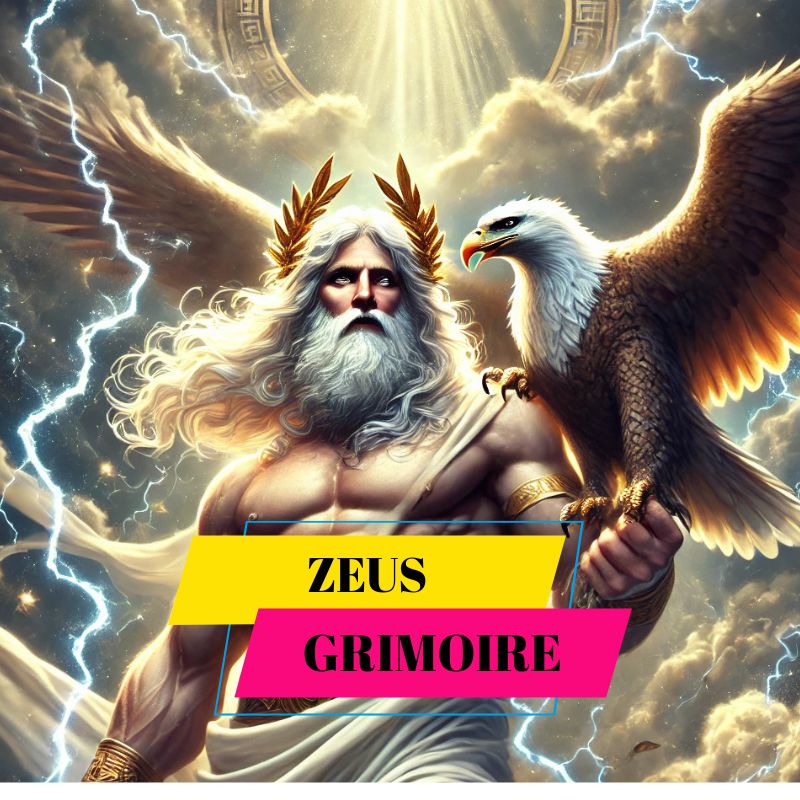
Student: Master Rhyan, Zeus is often associated with power and thunder, but you speak of him in leadership contexts. How is Zeus actually used for authority, law, and structural order rather than raw force?
Zeus Is Not About Power Displays
Marcus, most people approach Zeus with the wrong lens. They see lightning and assume aggression. They see kingship and assume domination.
That misunderstanding alone explains why many fail when they try to work with Zeus in leadership contexts.
Zeus is not about showing power.
Zeus is about establishing order that others naturally recognize.
Authority that needs to be displayed is already unstable. Zeus governs the kind of authority that does not need explanation.
Who Zeus Is Functionally
Zeus governs law, hierarchy, legitimacy, and structural coherence. His domain is not emotional loyalty or personal charisma. It is recognition of rightful position within a system.
Zeus does not make people like you.
He makes structures align around you.
That distinction is crucial in leadership.
Authority Versus Popularity
Leadership collapses when people confuse authority with approval.
Zeus does not care whether you are liked. He cares whether your role is structurally correct. When the structure is correct, approval becomes optional.
Under Zeus’s influence:
Decisions carry weight without persuasion
Resistance weakens without confrontation
Rules feel natural rather than imposed
Hierarchies stabilize instead of constantly shifting
This is authority that holds under pressure.
Law Is Pattern, Not Punishment
Another common mistake is thinking Zeus governs punishment.
He does not.
Zeus governs pattern enforcement. Law, in his domain, is not about consequence—it is about coherence. When law is present, behavior aligns because misalignment becomes inefficient.
In leadership contexts, this means:
Clear expectations replace micromanagement
Boundaries enforce themselves
Roles become obvious
Accountability feels inevitable rather than threatening
This is why Zeus is invaluable in organizations, governance, and long-term leadership roles.
Structural Order Is Invisible When It Works
People notice chaos. They rarely notice order.
Zeus works at the level where order becomes invisible. Systems run smoothly. Decisions propagate correctly. Authority flows through channels rather than personalities.
If you are constantly asserting authority verbally, Zeus is not active yet.
When Zeus is active:
People stop questioning your right to decide
Conflicts resolve themselves earlier
Your position feels “settled” in the environment
That settlement is structural, not emotional.
Zeus in Leadership Contexts
Zeus is best used when leadership problems stem from structural weakness, not lack of motivation.
He is especially effective when:
Authority is unclear or contested
Leadership roles overlap or conflict
Rules exist but are not respected
Decisions are constantly challenged
Power struggles drain energy
Zeus clarifies hierarchy without hostility.
Why Zeus Does Not Work for Insecure Leaders
This part matters.
Zeus does not compensate for insecurity. He exposes it.
If someone seeks Zeus to feel powerful, they usually experience discomfort. Zeus amplifies responsibility, not ego. He demands congruence between role, behavior, and decision-making.
If you avoid accountability, Zeus will feel heavy.
If you accept accountability, Zeus feels stabilizing.
Leadership under Zeus is sober, not intoxicating.
Authority Without Tyranny
Many fear Zeus because they associate law with oppression.
That fear comes from misunderstanding authority.
True authority reduces force. When structure is correct, enforcement becomes minimal. Zeus supports leadership that:
Is firm without cruelty
Clear without rigidity
Decisive without aggression
Tyranny arises when structure is absent and force is used to compensate. Zeus removes the need for compensation.
Zeus and Decision-Making
One of Zeus’s most practical leadership benefits is decision finality.
Under Zeus’s influence:
Decisions settle instead of lingering
Second-guessing decreases
Outcomes are accepted more readily
Execution improves
This is not because people are afraid. It is because decisions feel legitimate.
Legitimacy is Zeus’s signature.
Law Begins With Self-Order
Here is a truth many leaders avoid.
Zeus does not establish order externally if you are internally disordered.
If your priorities shift constantly, if your values are negotiable under pressure, if your boundaries are inconsistent, Zeus will not stabilize your authority. He will expose the mismatch.
Zeus begins with self-governance.
Once internal order is present, external order follows naturally.
Zeus Does Not Replace Strategy
This is important.
Zeus does not plan for you. He does not analyze markets, politics, or competition. He ensures that once a strategy is chosen, it holds.
Use Zeus after strategy is set, not instead of it.
He stabilizes execution.
Leadership Is a Position, Not a Performance
Zeus governs position.
When you work with Zeus correctly:
You stop performing leadership
You stop explaining yourself excessively
You stop managing perception
You occupy the role, and the environment adjusts.
This is deeply uncomfortable for people addicted to validation. It is profoundly relieving for those who want effectiveness.
Why Zeus Is Unsuitable for Short-Term Influence
Zeus is not a quick-fix deity.
If your goal is short-term persuasion, charisma, or emotional buy-in, other currents are better suited. Zeus builds durable authority, not temporary influence.
He excels in:
Long-term leadership
Institutional roles
Governance structures
Legal and organizational authority
If you want flash, look elsewhere. If you want stability, Zeus is unmatched.
Signs Zeus Is Working Correctly
You will notice:
Less resistance, not more obedience
Fewer emotional confrontations
Clearer lines of responsibility
Reduced need for enforcement
Increased calm in decision-making
If things feel louder or more aggressive, something is misaligned.
The Cost of Zeus-Level Authority
Authority has a price.
You lose the comfort of ambiguity. You lose the option to avoid responsibility. You lose the excuse of confusion.
Zeus does not allow leaders to hide.
In exchange, you gain stability.
Why Zeus Is Often Misused
People call Zeus when they want control.
Zeus responds when you are willing to accept burden.
Control seeks compliance. Authority accepts responsibility. Zeus aligns with the latter.
A Grounded Orientation That Works
Approach Zeus with this posture:
“I accept the responsibility of this role.
I will act consistently.
I will uphold structure even when it is inconvenient.”
That is the language Zeus recognizes.
Where This Leaves You
Marcus, Zeus is not a god you use to feel powerful.
He is a god you work with when you are ready to hold a system together.
In leadership contexts, Zeus brings:
Legitimate authority
Structural clarity
Durable order
Reduced conflict
Calm decisiveness
He replaces force with form.
And when form is correct, power no longer needs to announce itself.
That is Zeus at his best—and why true leaders eventually stop chasing influence and start building structure instead.