How to Work with Bragi
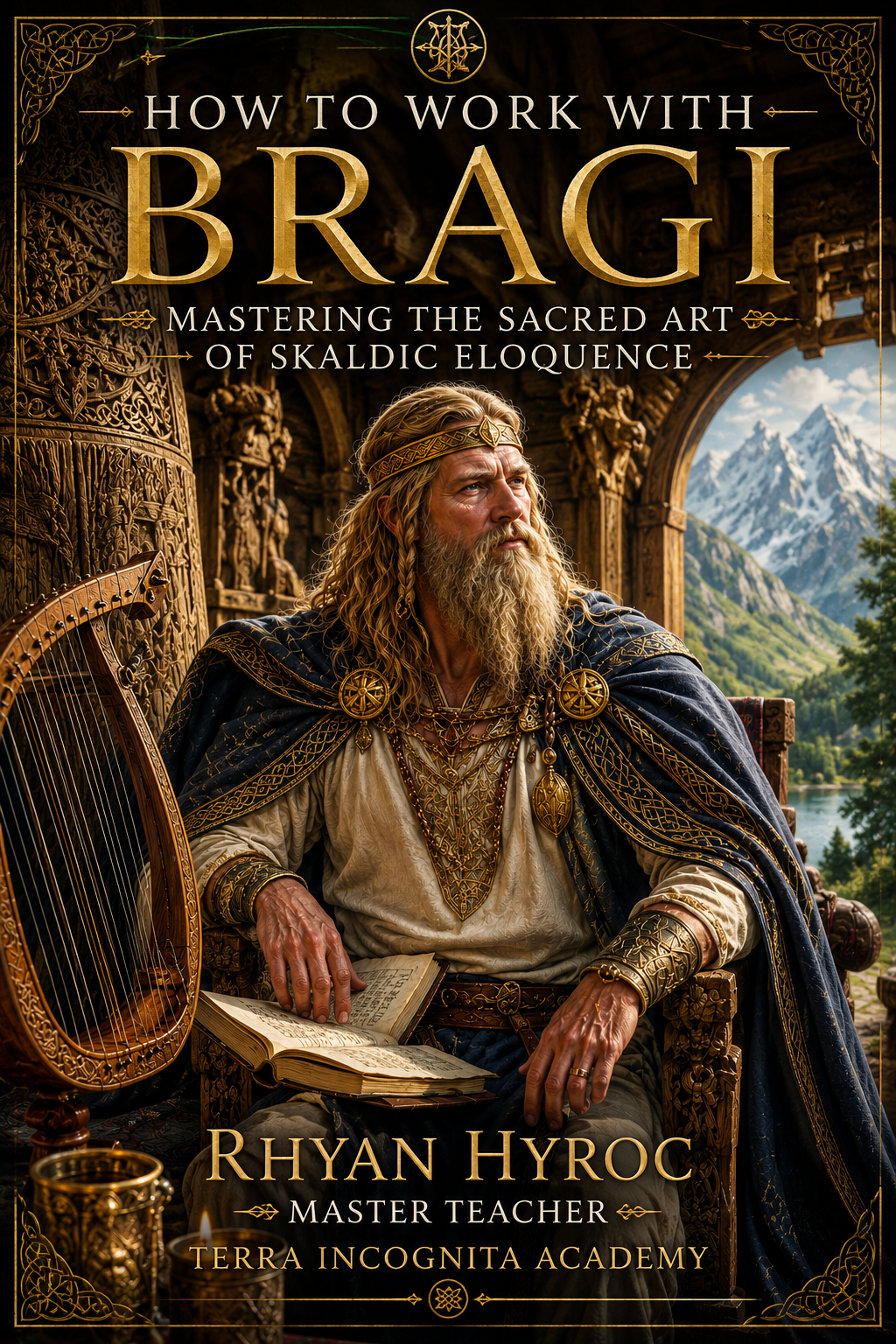
Throughout history, words have inspired kingdoms, preserved civilizations, settled conflicts, and awakened souls. The ancient Norse understood something many people have forgotten: Words are power. Every spoken phrase carries intention. Every poem shapes memory. Every carefully chosen sentence has the potential to transform both the speaker and the listener. Among the Norse gods, no deity embodies this sacred mystery more completely than Bragi , the divine master of poetry, eloquence, inspiration, and verbal mastery. How to Work with Bragi is far more than an introduction to Norse mythology. It is a complete spiritual guide for developing an authentic relationship with one of the most respected gods of the Norse pantheon while learning how ancient traditions can cultivate creativity, wisdom, confidence, and inspired communication in everyday life. The journey begins by exploring who Bragi truly is. Rather than presenting him as a distant mythological figure, the book reveals his historical role within the surviving Norse sources, examining his origins, the meaning of his name, his appearance in the Poetic Edda, and his place among the gods of Ásgarðr. His connection with the skalds—the legendary poets whose verses preserved the memory of an entire civilization—provides the foundation for understanding why Bragi remains such an important spiritual ally today. From there, the reader discovers the deeper symbolism behind Bragi's attributes, iconography, sacred associations, and historical cultic traditions throughout Scandinavia. Mead, the legendary drink of poetic inspiration, ritual offerings, seasonal observances, and ancient devotional customs are presented not simply as historical curiosities but as living practices that can still enrich modern spiritual work. One of the greatest strengths of this guide is its balance between historical knowledge and practical application. The book gradually teaches how to prepare for meaningful spiritual interaction through energetic cleansing, mental focus, devotional practice, and sacred space creation before introducing methods for building a respectful and lasting relationship with Bragi. Daily offerings, home shrines, outdoor altars, devotional routines, and structured spiritual progression allow practitioners to establish a genuine connection that develops naturally over time rather than relying on isolated rituals. As the relationship deepens, readers are introduced to some of the most fascinating spiritual practices preserved within the Norse tradition. Galdr—the ancient art of sacred vocal magic—is explored as a practical method for directing intention through rhythm, vibration, and sound. Alongside Galdr, the book examines Seiðr, the visionary tradition of Norse spirituality, showing how altered states, meditation, and symbolic awareness can deepen communication with Bragi while expanding personal insight and inspiration. Dream incubation becomes another doorway into Bragi's guidance. Instead of waiting passively for inspiration, readers learn how to intentionally prepare the mind before sleep, creating conditions that encourage meaningful dreams, symbolic messages, creative breakthroughs, and spiritual reflection guided by Bragi's current. Runes also play a central role throughout the work. Rather than presenting them simply as an alphabet or divination system, the book demonstrates how runic symbolism may be integrated into devotional practice, talisman creation, ritual work, and personal meditation, allowing practitioners to strengthen both magical focus and creative expression. Practical instruction continues through the creation of sacred talismans, ritual tools, offerings of mead, water and earth ceremonies, riverside devotions, and structured rites designed to honor Bragi while cultivating eloquence, confidence, artistic inspiration, and disciplined communication. Beyond ritual itself, the book explores the philosophical foundations of Norse theurgy, illustrating how spiritual practice becomes a living partnership between practitioner and deity rather than a collection of disconnected ceremonies. Equally important is the integration of Bragi's teachings into everyday life. Creative inspiration is shown not as a gift reserved for poets, but as a skill that can enrich writing, teaching, leadership, music, public speaking, storytelling, education, and every situation where words shape human experience. The final chapters bring everything together through a complete ceremonial rite dedicated to Bragi, combining the devotional practices, ritual techniques, offerings, vocal magic, and symbolic elements developed throughout the book into one cohesive spiritual working. Whether your goal is to deepen your Norse pagan practice, strengthen your creative abilities, improve your communication skills, or explore authentic Heathen spirituality, this guide provides a structured path that blends scholarship, tradition, ritual, and personal experience. Bragi reminds us that true mastery does not begin with louder words. It begins with wiser ones. And every inspired word has the power to shape both the world around us and the person we become.
Price: €15