How to Work with Týr
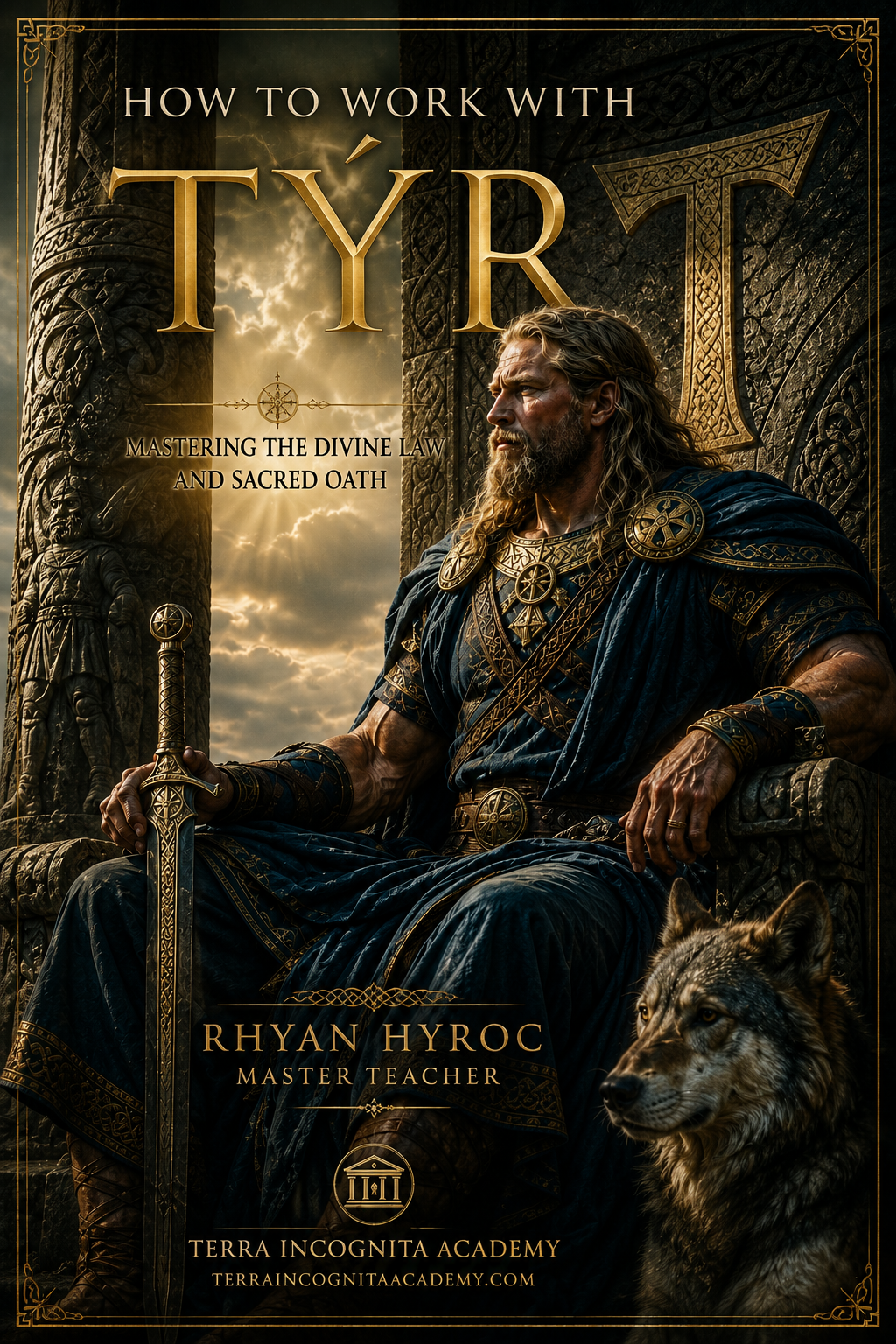
Every civilization has celebrated warriors. Far fewer have honored those who uphold justice . Among the gods of the Norse world, Týr occupies a unique place. He is not remembered for conquest or thunder, but for something even more enduring: the courage to sacrifice for truth, the discipline to uphold sacred law, and the unwavering commitment to honor every oath, regardless of the personal cost. How to Work with Týr is a complete guide for practitioners who wish to develop an authentic spiritual relationship with one of the oldest and most respected deities of the Norse pantheon. More than a collection of myths or historical references, this work presents a structured system for understanding Týr's role in mythology, ritual practice, spiritual development, and daily life. The journey begins by exploring the origins of Týr himself. Drawing upon the Poetic Edda, the Prose Edda, linguistic research, and historical traditions, the book uncovers the evolution of a deity whose roots extend deep into Proto-Indo-European spirituality. Readers discover how Týr became the divine embodiment of justice, lawful order, courage, honorable leadership, and personal responsibility. Central to his mythology is the legendary binding of Fenrir. Far more than an ancient story, this pivotal event reveals the spiritual meaning of sacrifice, integrity, and the sacred power of keeping one's word. Through this myth, the reader gains a deeper understanding of why oaths were considered among the most powerful spiritual acts within Norse society and why Týr became their eternal guardian. Building upon these foundations, the book moves beyond mythology into practical spiritual work. Historical evidence, archaeological discoveries, sacred sites, runic inscriptions, and ancient places of worship provide valuable insight into how Týr was honored throughout the Norse world. These traditions become the framework for building a modern practice rooted in historical understanding while remaining meaningful for contemporary practitioners. A major focus of the book is the spiritual significance of sacred oaths. Readers learn why promises were viewed as living spiritual contracts, how personal integrity shapes magical practice, and why discipline remains one of the greatest forms of spiritual power. Rather than treating oaths as symbolic ceremonies, the book presents them as transformative commitments capable of reshaping both character and destiny. The practical sections provide detailed guidance for developing a consistent relationship with Týr. Readers discover how to establish ritual space dedicated to justice and honor, prepare offerings with intention, select meaningful ritual timing, and align ceremonies with planetary and seasonal correspondences associated with the god. Every practice is designed to strengthen focus, discipline, and ethical awareness while deepening spiritual connection. Runic practice also receives extensive attention. The Tiwaz rune is explored as far more than an ancient symbol. Its historical significance, magical applications, meditative uses, and ritual integration are examined in detail, allowing practitioners to work consciously with one of the most powerful runes associated with courage, leadership, and righteous action. The guide further explores traditional Norse magical disciplines, including Seiðr and Galdr, explaining how these ancient methods can complement devotional practice while remaining aligned with Týr's principles of responsibility and balance. Throughout the book, magical work is consistently framed within ethical practice, reinforcing that true strength is inseparable from wisdom and self-control. Readers will also learn how to create ritual tools and talismans inspired by Týr's symbolism. Ritual swords, protective objects, runic talismans, and sacred instruments become more than ceremonial accessories—they become physical reminders of personal honor, commitment, and spiritual discipline. Another distinctive feature of this work is its exploration of the spiritual allies connected to Týr. Rather than emphasizing dramatic supernatural experiences, the book focuses on developing respectful relationships with the spiritual forces that embody justice, courage, discernment, and lawful order. This balanced approach encourages steady growth grounded in responsibility rather than sensationalism. As the journey continues, the teachings expand into leadership, personal accountability, conflict resolution, and the application of divine law within modern life. Týr's wisdom is shown to extend far beyond ritual, offering guidance for making difficult decisions, maintaining integrity under pressure, and leading others through example rather than authority alone. The final chapters weave together mythology, ritual, history, ethics, and spiritual practice into a complete path of personal transformation. Working with Týr becomes more than devotional practice—it becomes a lifelong commitment to living with courage, fairness, honor, and unwavering integrity. Whether your interest lies in Norse mythology, Germanic spirituality, rune magic, devotional practice, or the cultivation of personal discipline, How to Work with Týr offers a carefully structured approach that combines historical scholarship with practical application. Týr reminds us that true strength is not measured by victory in battle. It is measured by the promises we keep, the justice we defend, and the sacrifices we willingly make for what is right. If you seek to cultivate courage without arrogance, authority without tyranny, and power guided by wisdom, this book offers a profound path into one of the oldest and most enduring traditions of the Norse spiritual world.
Price: €15