Spiritual Healing Through Forgiveness
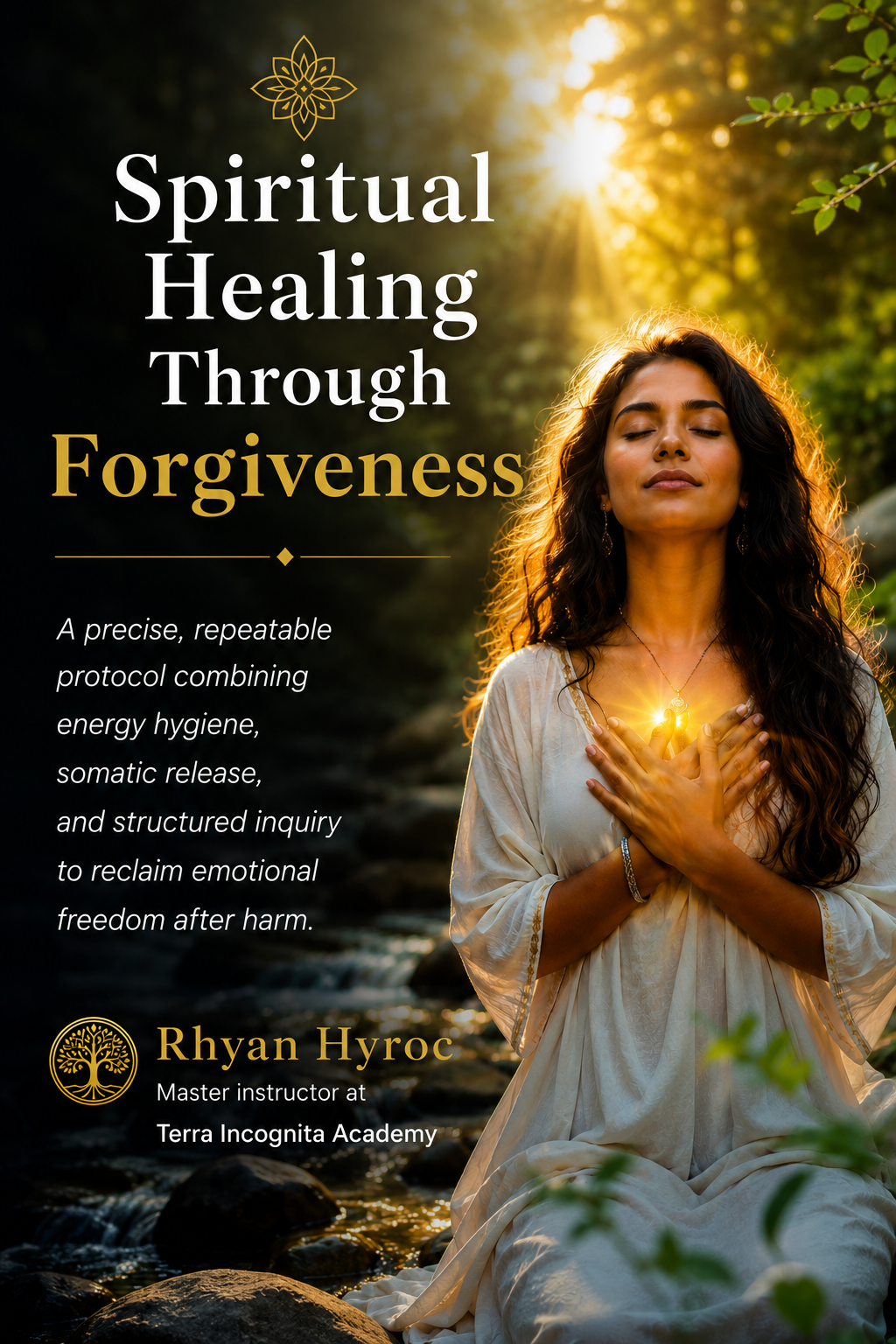
How much energy is being consumed by something that happened years ago? Not because you want to think about it. Not because you enjoy carrying it. But because some wounds refuse to let go. The arguments replay. The betrayal resurfaces. The anger returns unexpectedly. The grief lingers. The shame whispers. The fear remains alert long after the danger has passed. Many people believe forgiveness means excusing harmful behavior, forgetting what happened, or reconciling with those who caused pain. This book rejects those assumptions completely. Spiritual Healing Through Forgiveness presents forgiveness as something entirely different: a practical process for recovering your attention, vitality, emotional balance, and personal freedom. The goal is not to help the person who hurt you. The goal is to help you stop carrying the burden. Unlike many books on forgiveness, this work does not rely on vague inspiration, spiritual slogans, or moral obligations. Instead, it provides a structured protocol that combines emotional processing, somatic awareness, boundary repair, narrative clarity, energetic restoration, and practical integration. The result is a system designed to produce measurable relief rather than temporary emotional comfort. One of the most powerful aspects of this book is its focus on precision. Readers learn how to identify exactly what they are trying to forgive by distinguishing between event-based wounds, recurring behavioral patterns, and deeper identity-based injuries. Instead of becoming overwhelmed by years of accumulated emotional pain, the process teaches how to isolate specific experiences and work with them safely and effectively. This alone can transform forgiveness from a confusing concept into a workable practice. The book then moves into the body, where unresolved emotions often remain stored long after the mind believes it has moved on. Through the development of somatic literacy, readers learn how anger, grief, shame, and fear manifest as physical experiences rather than abstract ideas. Emotional states become observable, manageable, and ultimately releasable. This creates a foundation for authentic healing rather than intellectual analysis alone. Equally important is the focus on energy management. Many people notice that unresolved conflict drains motivation, concentration, creativity, and emotional resilience. This guide introduces practical methods for grounding, containment, cleansing, replenishment, and energetic stabilization. These techniques help prevent emotional processing from becoming overwhelming while supporting sustainable recovery. Another major strength of this work is its exploration of the mechanisms that keep resentment alive. Rather than treating resentment as a personality flaw, the book examines it as a system. Readers learn how emotional triggers, unmet needs, unresolved boundary violations, and repetitive mental narratives continuously reactivate old pain. By understanding the structure of resentment, it becomes possible to dismantle it. The book also provides a sophisticated approach to self-forgiveness. Many people can identify mistakes they regret but struggle to move forward. Here, guilt, shame, accountability, and responsibility are carefully separated. Readers learn how to acknowledge errors honestly without collapsing into self-attack, creating a pathway toward growth without self-condemnation. Attention training forms another critical component. Rumination often feels automatic, yet it consumes enormous amounts of emotional energy. Through practical exercises and structured interventions, readers learn how to interrupt repetitive mental loops and redirect attention toward constructive healing. The later sections expand into advanced territory, including memory reconsolidation, emotional release methods, energetic diagnostics, cord release practices, boundary restoration, dreamwork, and inner-child integration. These chapters transform forgiveness from a single action into a complete healing framework. Readers are guided through dedicated processes for releasing anger, integrating grief, transforming shame, resolving fear, and repairing trust after betrayal. Each emotional state is approached with its own methodology, recognizing that different wounds require different forms of healing. Perhaps most importantly, the book recognizes that healing is not complete when emotional pain disappears. Healing is complete when life energy returns. When attention becomes available again. When relationships improve. When boundaries become stronger. When peace no longer depends on external circumstances. By the final chapters, readers possess a complete, repeatable system that can be applied to future challenges as well as past wounds. The protocol integrates preparation, inquiry, emotional processing, energetic repair, and long-term integration into a practical framework designed for lasting results. This is not a book about becoming passive. It is not a book about pretending everything is acceptable. It is not a book about surrendering healthy boundaries. It is a book about freedom. Freedom from resentment. Freedom from emotional exhaustion. Freedom from the endless replaying of old injuries. Freedom to reclaim your energy, your attention, your peace, and your future. If you are ready to stop carrying what no longer serves you and begin rebuilding from a place of clarity, strength, and self-trust, Spiritual Healing Through Forgiveness provides a structured path forward.
Price: €29