Control Energy, Control Everything
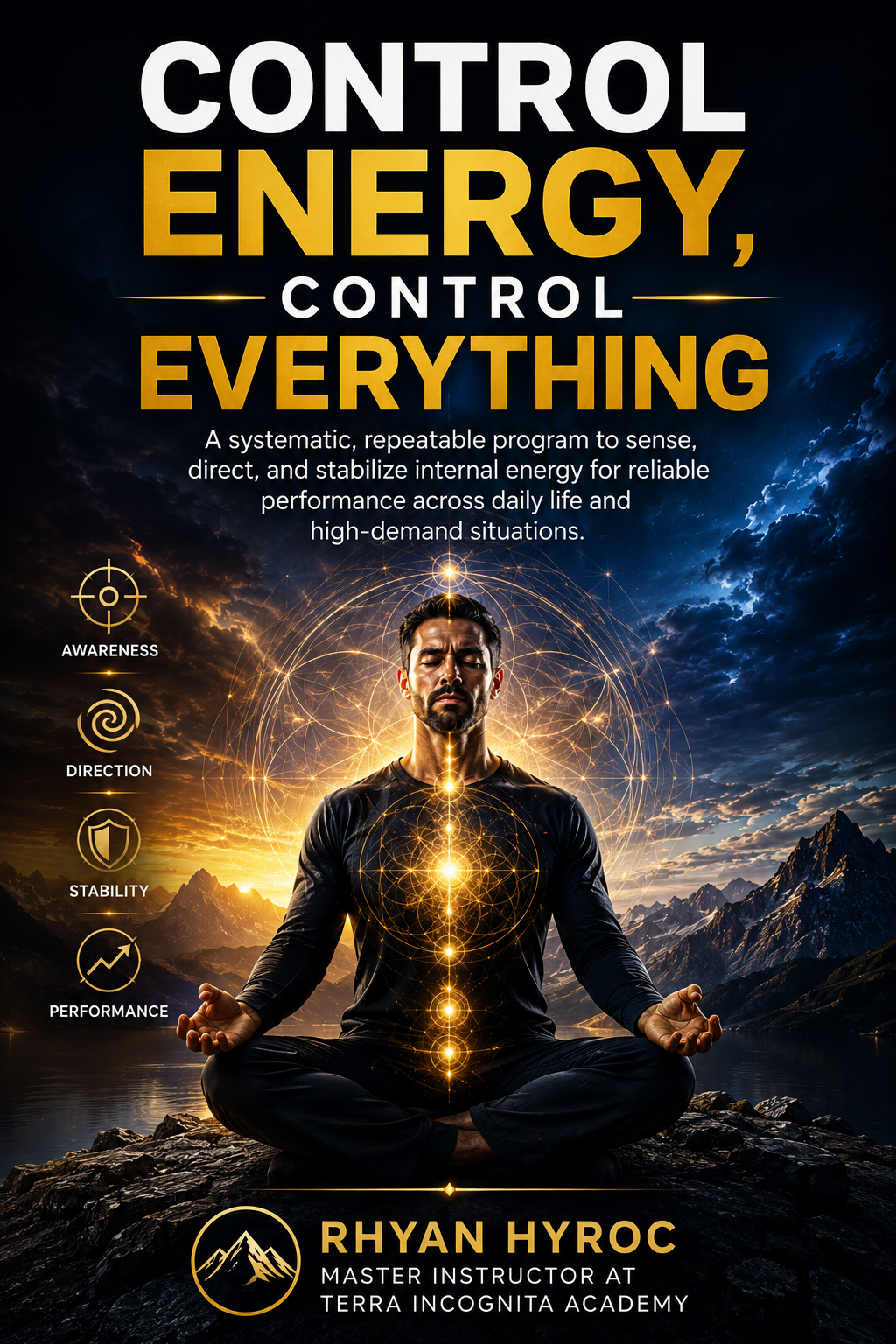
Why do some people remain focused, composed, and effective under pressure while others become overwhelmed, distracted, exhausted, or reactive? The answer is rarely intelligence. It is rarely talent. And it is almost never motivation. The difference is energy control. Not energy in the vague, mystical sense. Not motivation. Not excitement. Not temporary inspiration. But the ability to deliberately regulate the internal systems that determine focus, stability, recovery, resilience, and performance. Control Energy, Control Everything was written for people who want to stop being controlled by their internal state and start controlling it. This book transforms the concept of energy from an abstract idea into a measurable, trainable, and highly practical skill. Instead of offering motivational slogans or temporary productivity hacks, it presents a complete framework for understanding how your internal operating system actually functions—and how to improve it. At the heart of the system lies a simple but powerful insight: Your performance is never random. Every productive day, every distracted afternoon, every period of focus, every episode of fatigue follows identifiable patterns. When you learn to recognize those patterns, you gain the ability to influence them. The book begins by teaching you how to map your personal energy economy. Rather than guessing how you feel, you learn how to identify objective indicators of performance, attention quality, breathing patterns, physical tension, mental stability, and recovery readiness. This process creates a level of self-awareness that most people never develop. For the first time, you begin to understand not only how you perform—but why. From there, the book introduces one of its most valuable concepts: The three primary levers of human regulation. Breath. Attention. Posture. These seemingly simple elements become powerful tools for changing internal states quickly and reliably. You will learn how to identify early warning signals of fatigue, distraction, overload, and cognitive drift before they become serious problems. Instead of waiting until performance collapses, you will know how to intervene immediately. The result is greater consistency, greater stability, and far fewer wasted days. One of the most practical strengths of this book is its focus on real-world application. Every concept is designed to work in demanding environments. Whether you are running a business, studying, managing a team, competing in sports, creating content, or handling intense workloads, the techniques are built for immediate implementation. The book teaches how to strengthen concentration without force, improve recovery without inactivity, and maintain productivity without falling into burnout cycles. You will discover how to create functional balance between effort and recovery, allowing you to maintain high output for longer periods without sacrificing well-being. A particularly powerful section explores attention control. Most people assume concentration is something they either have or lack. This book demonstrates that attention is a trainable resource. You will learn how distractions develop, how focus deteriorates, and how to restore mental clarity using practical correction protocols that can be applied in minutes. The benefits extend far beyond productivity. Improved attention leads to better decision-making, greater emotional stability, stronger learning capacity, and improved performance under pressure. The book also introduces operational state management. Rather than being trapped by fluctuating moods, you learn how to intentionally shift into specific states such as focused work, recovery mode, calm presence, sleep readiness, or high-performance execution. These state transitions become repeatable skills rather than unpredictable experiences. Another major advantage is the development of a personal diagnostic system. Instead of wondering why performance has declined, you learn how to identify the exact source of the problem. Mental fatigue. Overstimulation. Poor recovery. Attention fragmentation. Stress accumulation. Each has distinct signals and distinct solutions. This dramatically reduces uncertainty and allows for faster correction. As the system evolves, readers build a complete framework for daily operation. Morning preparation. Midday recalibration. Evening recovery. Stress management. Performance optimization. Sleep preparation. Every component works together to create a reliable structure capable of supporting long-term success. Perhaps most importantly, this book replaces dependence on motivation with dependence on systems. Motivation fluctuates. Energy systems can be trained. And when they are trained correctly, performance becomes far more predictable. By the final chapter, you will possess a practical operating system for managing your internal environment with greater precision, clarity, and confidence. You will know how to increase energy without agitation, decrease stress without collapse, recover efficiently, maintain focus under pressure, and adapt rapidly to changing demands. Because ultimately, the quality of your life is determined by the quality of your internal state. And when you learn to control that state consistently, you gain influence over everything that follows.
Price: €29